News & Media

Voluntary Gender Pay Gap Calculator Toolkit Launched at Champion Summit

The Government’s new gender pay gap calculation tool was launched at yesterday’s Champions for Change

The Government’s new gender pay gap calculation tool was launched at yesterday’s Champions for Change summit by Minister for Women Nicola Grigg.

Developed by Champion organisation Manatū Wāhine – Ministry for Women, the toolkit offers businesses access to a pay gap calculator, downloadable tailored action plan, and material to support and guide businesses through the pay reporting process.

Manatū Wāhine collaborated with sector leaders and organisations and drew on international approaches during the development of the tool, which will enable New Zealand businesses to assess and address their pay gaps.

“There are significant benefits to understanding and addressing pay gaps, including increased productivity, so our Government is taking action,” says Minister Grigg.

“Many businesses are taking steps to improve their gender pay gaps, and so I encourage all businesses to be courageous and calculate their gaps. This is not about casting judgement on those who have wider gender pay gaps but, instead, is a useful tool that encourages organisations to look beyond the numbers.”

Champions for Change Co-Chairs Roger Gray (CEO of Port of Auckland) and Antonia Watson (CEO of ANZ Bank) welcomed the launch of the toolkit.

“[The tool is] a positive step forward and we are pleased to endorse this work,” says Roger.

The voluntary calculation tool has been designed to be as accessible as possible, to encourage the participation of all organisations. Champions for Change provided expertise and feedback throughout the development process.

“Measurement and reporting of our own gender pay gaps have been an important part of the Champions’ progress and we certainly support the initiative to make this more accessible for businesses more widely,” says Antonia.

Minister Grigg expressed her gratitude to Champions for Change and all those who contributed to the development of the toolkit.

“It is my strong desire for this to be a continued partnership with business as we make further developments to the toolkit over time, including considering ways to address ethnic pay gaps,” says Minister Grigg.

The gender pay gap in Aotearoa New Zealand currently sits at 8.2%. The pay gap for wāhine Māori, Pacific and Asian women, and disabled women is significantly higher than the overall national gender pay gap. Pākehā women earn a median hourly rate of $33.70, Asian women earn a median of $30.00, wāhine Māori earn a median of $29.71, and Pacific women earn a median of $29.00.

Manatū Wāhine – Ministry for Women’s Gender Pay Gap Toolkit is now live and available for use here.

Seven Years of Progress: Champions for Change Release Aotearoa’s Most Extensive DE&I Report to Date

Champions for Change has today released our seven-year progress report, the first of its kind

Champions for Change has today released our seven-year progress report, the first of its kind since the collective was formed in 2015.

This is Aotearoa’s most significant and extensive Diversity, Equity & Inclusion Impact report to date, comprising of over 1.4m data points across the 62 Champions for Change organisations, surveying an average annual workforce of 112,000 people.

The report shows how Champions have made real, meaningful change over the period and predicts that the collective is on target to have 100% of their boards gender balanced by their tenth annual report in 2027.

“This seven-year report marks a significant milestone for the Champions and the results we have achieved in this time have been extremely encouraging. Of course, there is still much work to be done and we will continue to hold ourselves accountable, sharing our progress each year,” says Antonia Watson, CEO of ANZ New Zealand and Co-Chair of Champions for Change.

“Kia uru kahikatea ki tū! Like the kahikatea, we are stronger together as a community. We have more growing to do but we will support one another along the journey.”

Since reporting began, six Champion organisations have completely closed their power gaps, and a further 22 organisations have achieved gender balance at board, executive or management levels. Employees declaring diverse gender identities has grown by a factor of 8x over the reporting period and the number of organisations with employees with diverse gender identities has grown by nearly 3x.

Progress on ethnicity representation has been slower, however Māori representation at a board level has increased from 2% to 12%, since 2020. The number of employees declaring an Asian ethnicity has nearly doubled, exceeding the proportion of Asians in the working-age population, and the proportion of senior executives declaring more than one ethnicity has increased.

“It has undoubtedly been a challenging time for many New Zealand organisations, coming through the pandemic and now navigating the current economic conditions. Despite this though, the Champions have remained steadfast on their focus on shifting the dial and to their commitment to make a more equitable Aotearoa for all,” says Roger Gray, CEO at Port of Auckland and Co-Chair of Champions for Change.

“We would like to acknowledge the Champions’ and their teams’ ongoing commitment to this mahi. Together, they make this movement possible.”

The full seven-year summary and the 2024 Champions for Change Impact Report can be found here.

Charting Port of Auckland’s Commitment to Strengthening its Pasifika Community

Through the embodiment of its guiding values for collective conduct, Global Women Partner Port of

Through the embodiment of its guiding values for collective conduct, Global Women Partner Port of Auckland is setting a gold standard for intra-community care and connection.

With nearly a third of its workforce comprised of Pasifika peoples, Port of Auckland’s dedication to uplifting its community is underscored by its approach to nurturing a sense of belonging for its staff. Whanaungatanga is at the heart of its transformational journey into fostering diversity, equity and inclusion.

Driven by the aptly named Port Behaviours, a set of guiding principles that encapsulate the values, ethos, and vision of the organisation, Port of Auckland is effectively cultivating an environment where mutual respect thrives and its diverse workforce is actively engaged.

We connected in with Tihina Tusa, Port of Auckland Kaiārahi, to hear more about the organisation’s transformative journey, and what those principles look like in action. Tihina shared with us her experience as a Pasifika woman leader at Port of Auckland, the mahi she has been undertaking in this space, and what’s coming next.

As a Kaiārahi, you act as a navigator for your team — can you tell us more about how you came to work in the people leadership space and your experience at Port of Auckland?

I’ve always had a passion for helping people. Growing up in Tonga and later moving to New Zealand in 2005, I often saw how our Pasifika people missed out on opportunities due to a lack of support or guidance to steer them in the right direction. In many island cultures, women have often been seen as stay-at-home mothers or wives, while men are typically viewed as the breadwinners. This cultural norm often shaped gender roles and expectations within our communities. As a Pasifika woman, I am committed to join the growing movement of Pasifika women leaders who are breaking these barriers by challenging traditional expectations.

When I first started in this role, being the only woman on our team and having to lead a group composed entirely of men meant I sometimes had to deal with unfair judgments or assumptions based on gender and cultural differences. Being a Kaiārahi involves balancing the need for cultural authenticity and the practical demands of day-to-day operations. Ensuring I understood and respected cultural backgrounds, while prioritising safety, performance and engagement was essential.

“I am committed to join the growing movement of Pasifika women leaders who are challenging traditional expectations.”

As a Kaiārahi, my role is to lead and guide a crew of Stevedores, ensuring that my people have equal opportunity to participate and leverage their experiences and expertise to enrich our workplace. Being our people’s voice and creating an environment that values and nurtures their unique talents and cultural strengths based on trust and transparency is probably the most important thing for me as a Kaiārahi. It has been both a privilege and a humbling experience to support our diverse workforce in reaching their full potential, whether at work or out in their communities.

Balancing operational demands with cultural authenticity feeds in to Port of Auckland’s dedication to safety and value of whanaungatanga. How have those values shown up in your mahi with Port of Auckland’s Pasifika workforce?

Two key things our people value is the importance of family and faith. Juggling the leadership of individuals who deeply value their faith and family commitments, all while keeping up with our operational demands sure isn’t a walk in the park. In recognition of these values, Port of Auckland, in partnership with Maritime Union, developed a Dynamic Roster that allows our people to balance their personal commitments without compromising work responsibilities.

To acknowledge the importance of family to our people, we organised a special bus tour designed for our employees and their partners. This tour offers extended whānau the opportunity to explore our workplace environment firsthand. The purpose was to provide people’s loved ones with a better understanding of where their family members work and the environment they’re in every day. We hope that providing this insight fosters deeper connection, promotes support, and contributes to a healthier work-life balance for our people.

“As part of our commitment to whanaungatanga, we hosted community recruitment centres exclusively for our Tuvaluan, Tongan, and Samoan communities.”

As part of our commitment to whanaungatanga, we also implemented changes to how we run recruitment. I was involved with our community recruitment assessment centre, which was uniquely tailored to specific Pacific Island communities. Unlike other organisations, we hosted centres exclusively for our Tuvaluan, Tongan, and Samoan communities. Candidates were encouraged to bring their own support person if they wished, fostering a supportive and inclusive environment. We integrated elements of Pacific Island cultures into the assessment process, beginning with singing and a prayer in their own language, and concluding with shared kai. This culturally sensitive approach not only honoured the traditions of these communities but also created a welcoming and respectful atmosphere.

“Being part of the working group and championing the Pasifika framework is very exciting, particularly for the future support and development of our Pasifika employees.”

Another incredible project I’ve been involved with is the celebration of Pasifika Day, which we held for the first time last year. The event was a huge success, garnering overwhelmingly positive feedback from both our leaders and employees. Building on this success, Port of Auckland, in partnership with PwC, is currently developing a Pasifika framework. Being part of the working group and championing this framework is very exciting, particularly for the future support and development of our Pasifika employees. This initiative underscores our commitment to nurturing an environment that recognises and celebrates the unique contributions of our Pasifika community.

The development of a Pasifika framework is an exciting next step for Port of Auckland. What further opportunities and challenges do you see on the horizon for mahi in this space?

We are constantly looking at ways to improve our culture and meet our customers’ and shareholders’ expectations, often necessitating changes in how we operate. As we strive to meet our organisational goals, one of the biggest challenges I see is that people often resist changes. Through my experience and my leadership training, I’ve learned that it’s not the change itself that people fear, but the potential impact these changes may have on their lifestyle. It is crucial to communicate the benefits of these changes effectively and offer the appropriate support during the transition.

“Having leadership that truly reflects the diversity of the workforce fosters a sense of inclusion and belonging among employees.”

We’re continuing to enhance our Diversity, Equity and Inclusion (DEI) efforts at the Port of Auckland. Through High Performance High Engagement (HPHE), we’re giving our people a voice and a way to influence their work and develop solutions. This approach is creating a positive culture and empowering our team to do more. By actively involving everyone and addressing their diverse needs and perspectives, we’re building a more inclusive and supportive workplace.

I also see that we have an opportunity for more diverse leaders. Having leadership that truly reflects the diversity of the workforce fosters a sense of inclusion and belonging among employees. This will help build a culture where all employees feel valued and understood. When employees see themselves represented in leadership, it reinforces the organisation’s commitment to DEI principles and encourages a more cohesive and collaborative work environment.

“We’re committed to fostering inclusivity and celebrating diversity in all its forms, and creating a workplace where everyone feels valued and empowered to succeed.”

Looking ahead, I’m excited about the future of my work in the DEI space at Port of Auckland. We’re committed to fostering inclusivity and celebrating diversity in all its forms, and we are continuing to enhance our DEI efforts. Key initiatives on the horizon include supporting our Pasifika Outcome Manager in championing the Pasifika Framework to support our Pasifika employees and expanding our community recruitment efforts to include more cultural groups. These efforts reflect our dedication to creating a workplace where everyone feels valued and empowered to succeed, and I’m proud to be part of driving these initiatives forward.

Empowering Whānau and Community: Unveiling the Economic Power of Māori Women

Manatū Wāhine Ministry for Women and Business and Economic Research Ltd (BERL)’s recent report on

Manatū Wāhine Ministry for Women and Business and Economic Research Ltd (BERL)’s recent report on the Māori women’s economy is a groundbreaking investigation of the economic, cultural, and wellbeing contributions of wāhine Māori to their whānau, businesses, and communities.   

Te Ōhanga Wāhine Māori, The Māori Women’s Economy is one of the first comprehensive studies of indigenous women’s economy internationally. The report includes the first formal inclusion of mahi tūao – unpaid work – in the total value of a women’s economy.  

In terms of paid work alone, the report reveals that wāhine Māori contributed $5.9 billion across all sectors of the economy in 2022. The largest total contributions were to business services ($1.9 billion value add) and social services ($1.8 billion value add). This overall contribution is more than doubled when accounting for mahi tūao.  

Unpaid household services accounted for 26% of the value earned by wāhine Māori households after wages, social security and assistance. With the inclusion of this mahi tūao, the total value of wāhine Māori’s economic contributes sits at $12.5 billion, equivalent to 3.2% of Aotearoa New Zealand’s national production GDP.  

Wāhine Māori’s economic contributions are underpinned by the role of wāhine Māori as strong leaders of cultural recovery and preservation. The report found that wāhine Māori place a high importance on cultural identity and whānau support, reflective of the historical and contemporary role of wāhine Māori as repositories of knowledge and drivers of the intergenerational transfer of knowledge, history, values and traditions.  

The importance of supporting whānau for wāhine Māori was further underpinned by the findings around paid mahi. There is a growing number of wāhine Māori working in the social services sector, reflected by a 32% increase in wāhine Māori employees between 2013 and 2018. Greater caring responsibilities at home for wāhine Māori can also limit opportunities to participate in employment and education, contributing to wāhine Māori earning 20% less than non-Māori wāhine overall.  

Wāhine Māori are less likely to be employed in highly-paid industries, such as engineering and technology, and are underrepresented in business. However, Māori are a fast-growing population, and wāhine Māori are estimated to comprise 22% of the total wāhine working-age population by 2043. While wāhine Māori only totalled 3.7% of employers or self-employed in 2018, this number is also on a steady increase. Wāhine Māori employers or self-employed grew by 31% over a five year period, an increase which is over four times that of non-Māori wāhine.  

Read the full Te Ōhanga Wāhine Māori report through Manatū Wāhine – Ministry for Women to discover further insights in to the Māori women’s economy.  

Champions Creating Cultures of Care

During our Champions for Change summit held in April, Roger Gray (CEO Port of Auckland)

During our Champions for Change summit held in April, Roger Gray (CEO Port of Auckland) and Peter Reidy (CEO KiwiRail) shared with us the invaluable experiences and unique challenges they’ve each faced on their journey toward diversity, equity, and inclusion (DEI) within their respective organisations. These stories provided a testament to their dedication as Champions for Change, highlighting their achievements, ongoing efforts, and the vital lessons learned along the way.

A pivotal theme that emerged from both Champions’ experiences was the critical role of ‘care’ as a driving force behind their organisations’ DEI initiatives. For both Port of Auckland and KiwiRail, the physical safety of team members is paramount. Beyond health and safety measures, care also serves as the foundation for creating authentic and inclusive cultures. It is by prioritising care that organisations are able to foster a true sense of belonging in the workplace.

For Port of Auckland, care is embedded in the organisation’s DEI strategy through its focus on making safety fundamental.  This focus is integral to the strategy’s initiative to ‘Strengthen our Mana,’ and is the top priority to be executed following the initial planning and stakeholder engagement phase of their DEI strategy. With safety as a cornerstone, Port of Auckland aims to build a culture where care is intrinsic, contributing to a sense of empowerment among its team members. By prioritising the safety of its team, Port of Auckland can confidently and effectively focus on its core business, celebrate its diversity, and ultimately realise its full potential to deliver for Aotearoa New Zealand.

In a similar vein, KiwiRail underscored ‘Care and Protect’ or ‘Manaakitanga’ as a central tenet of its value system, emphasising that care and protection extend beyond mere health and safety. As with Port of Auckland, the focus on protection and safety is particularly relevant given the physical nature of KiwiRail’s workplace and the inherent risks involved. The organisation is committed to not just providing material care and protection but also to ensuring a wraparound, holistic approach to care. Through targeted networks dedicated to uplifting underrepresented communities within the organisation, individuals are empowered to bring their whole selves to work. In fostering a secure and inclusive work environment through a culture that puts the care and safety first, KiwiRail is enabling the shift of mindsets and behaviours organisation-wide.

Reflecting on the summit’s discussions, it is clear that nurturing care and protection can lead to the cultivation of a truly inclusive workplace culture. By making care a cornerstone of belonging, organisations can realise their commitments to valuing and protecting every individual. It is this dedication to caring for work teams that paves the way for true diversity, equity, and inclusion within the workplace.

Leading for Future Generations: Whakatāne Welcomes in our Women in Leadership Series 2024

“Grow great people around you” and “be present wherever you are” were some of the

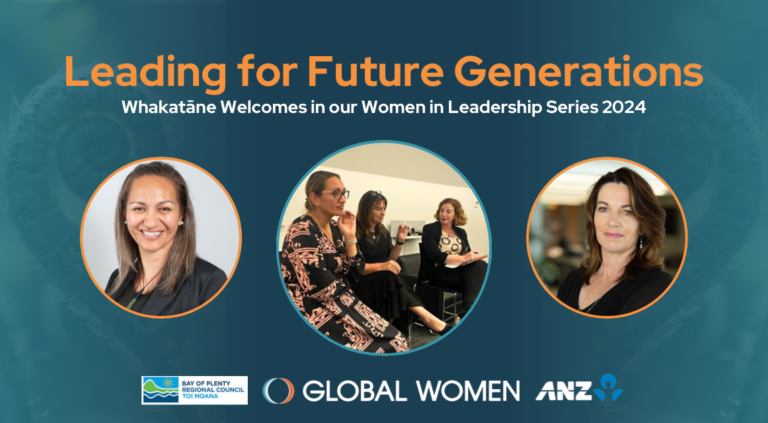
“Grow great people around you” and “be present wherever you are” were some of the words of wisdom shared by Lorraine Mapu and Faylene Tunui at the inaugural event of our Women in Leadership Series for 2024 in Whakatāne. With great humility and candour, these two wāhine toa beautifully showcased the power of wāhine sharing their stories for our communities and rangatahi to connect, grow, and be stronger together.  

Our hosts, the Bay of Plenty Regional Council, warmly welcomed in a full house through waiata, setting the tone for an intimate evening of generous and nourishing kōrero. Lorraine and Faylene were candid and open, speaking of community, family, and belonging to their multigenerational audience. As ANZ’s Managing Director for Business and Mayor of Kawerau respectively, Lorraine and Faylene acknowledged how Whakatāne and Kawerau have woven a community around their wāhine leaders. Each spoke about the importance of their roots and where they had come from, and of continuing to contribute back to the places, and people, that grew them. 

In addressing the importance of whānau, Lorraine and Faylene took a moment to acknowledge and celebrate grandmothers as strong role-models for young women. Faylene shared the wisdom of her grandmother and namesake, and Lorraine reminded the audience of the value in “taking time to smell the roses.” Another pearl of wisdom to arise through kōrero around family and familial principles and values was “do not be afraid to be your authentic self.” This thread was carried into a discussion of the importance of caring for future generations, not only in our communities but also in our workplaces. Lorraine and Faylene spoke of preparing jobs that will suit those that follow: “We are custodians of the organisations we are in, and our job is to prepare the organisation for the generations after us.”  

This focus on caring for past, present, and future generations was woven throughout the kōrero of the night. Each speaker spoke with wisdom, grace, and humility, embodying a generosity of spirit that is characteristic of the women leaders who present as part of our Women in Leadership series. Last year, at our first Whakatāne event, Kirsti Luke spoke to the whakataukī “Kāore te kūmara e kōrero mō tōna ake reka – the kūmara does not speak of its own sweetness.” Often women struggle with taking up space and speaking their stories, preferring forms of servant leadership that keep them out of the spotlight. Our speakers this year also drew on this whakataukī, addressing the discomfort often felt and the importance of speaking through it to share their stories for future generations. 

The insight emerged that, in sharing their stories, wisdom, and success, women leaders are proactively helping our daughters, the rangatahi on their journey, to better prepare one another. It is not about the kūmara speaking of how sweet it is, but about how we can weave together the strands we each have—especially if your strand does not fit. Together we can create a beautiful welcome mat that welcomes those that follow us to the whare. If we can help many women, Aotearoa New Zealand can be prosperous, and we will know we have done a good job: “You are a caretaker and your purpose is to grow the seedlings for the next generation. They will do more than you could imagine.”  

Lorraine and Faylene concluded their kōrero with words of wisdom for women at any stage of their leadership journey, encouraging the cultivation of grit and determination, and emphasising the importance of bringing all the gifts you have with you as a leader. It was a very special evening, bringing together and inspiring women leaders in the community.  

Thanks to our partnering hosts ANZ and Bay of Plenty Regional Council, to our speakers Lorraine Mapu and Faylene Tunui, and to our facilitator Cassandra Crowley.  

Celebrating PwC and Global Women – Our Thank You to Mark Averill

Last month, we had the opportunity to honour Mark Averill, who retired from his position

Last month, we had the opportunity to honour Mark Averill, who retired from his position as CEO of PwC New Zealand at the end of March.

Mark is a leader of great integrity and humility. Throughout his seven-year tenure, he has played a crucial role as a Champion for Change, leading in service of a gender-equitable Aotearoa New Zealand.

We wish Mark well as he embarks on new ventures, and we are looking forward to working alongside PwC’s new CEO, Andrew Holmes, as we continue this journey together.

Watch our celebration of Mark and our partnership with PwC below.

Global Women Announce New Partnership with JBWere New Zealand

We are delighted to announce Global Women’s new partnership with JBWere New Zealand, a leading

We are delighted to announce Global Women’s new partnership with JBWere New Zealand, a leading wealth manager dedicated to purposefully enacting sustainable change and prosperity.

For generations, JBWere NZ has been delivering investment solutions to women. The firm offers a specialised service focusing on Women’s Wealth, and is seeking to explore further opportunities to support financial education and advice for women.

“With this partnership I see an opportunity to drive positive organisational change and demonstrate our commitment to diversity, equity and inclusion,” says Craig Patrick, JBWere NZ CEO and newest member of our Champions of Change.

Over the past two years, the number of JBWere NZ’s financial advisors who are women has grown to 25%. At the end of the last financial year, a full pay equity review was conducted to ensure all staff were paid appropriately. Subsequently, the firm has established a target pay equity ratio between of 0.9-1.1 at each level of the organisation.

The new partnership with Global Women will further enable JBWere NZ’s commitment to supporting pay equity and the representation of women across all levels of staff. It will also assist the firm in exploring how it can best support women in their respective roles.

Global Women offers the opportunity for partners to connect with like-minded organisations, share best practices, and access a wealth of resources aimed at promoting the professional development of women.

“Engaging with other leaders and influencers in the Global Women network fosters valuable connections,” says Craig.

Supporting team wellbeing, providing opportunities, and creating an inclusive, equitable culture is foundational to realising the vision of JBWere NZ’s sustainability strategy. We are looking forward to supporting the firm in delivering on this commitment to its people and the communities they serve.

“Being part of this network allows me to tap into diverse perspectives, enriching the decision-making process and contributing to the long-term success and sustainability of our firm,” says Craig.

“Joining Global Women represents a proactive step toward shaping a more equitable and successful future for both the firm and our leadership.”

International Women’s Day #InspireInclusion – Full Video

Missed our International Women’s Day event? Not to worry, we have a recording for your

Missed our International Women’s Day event? Not to worry, we have a recording for your viewing. We hope you enjoy the kōrero among our talented and inspiring panel.


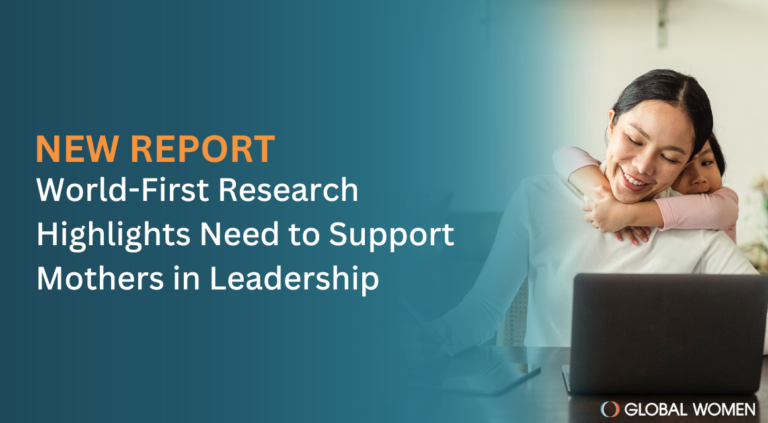
World-First Research Highlights Need to Support Mothers in Leadership

With the motherhood penalty continuing to be a leading cause of gender inequity in senior

With the motherhood penalty continuing to be a leading cause of gender inequity in senior leadership, expert leadership consultant Dr Amanda Sterling has released a new report on the experiences of mothers in leadership.  

“The report highlights what is holding mothers in leadership back, the ways this can be addressed, and the possibilities in doing so,” shares Amanda.  

Published through the University of Auckland’s Business School, the report summarises Amanda’s groundbreaking doctoral research into the experiences of 48 women with children under five in the workplace.  

Coming from a range of prominent corporations, community-based organisations, and innovative start-ups throughout Aotearoa New Zealand, each woman shared their experiences of pregnancy, childbirth, nursing, and caring for young children. The participants all either held leadership roles or were on a path to leadership. 

The research revealed that mothers feel pressure to meet leadership norms that are modelled on the experiences of men or women without children, regardless of what is happening within their body or at home. Mothers in positions of leadership experience these pressures to a higher intensity than others, due to the high visibility and responsibility of their roles.  

While the report’s findings provide clarity around the challenges faced by mothers in leadership, they also highlight how organisations can better support inclusive, impactful leadership for women whose experiences do not fit into current leadership models.  

“The research shows that a focused approach to supporting women in leadership could lead to better outcomes for women as well as the organisations that employ them,” says Amanda. 

The research’s findings challenge normalised workplace assumptions around leadership and reveal the ways participants were able to enact a more inclusive, vulnerable form of leadership. 

Participants shared how connecting with their embodied experiences as mothers enabled them to step into their leadership, creating both structural and cultural shifts within the workplace.  

Amanda says the report reveals how organisations have an opportunity to better recognise and support the experiences of pregnant women and mothers, and to build capability for vulnerability and connection into their leadership.  

From this research, Amanda has developed three pathways to support organisations in realising their leadership and gender equity goals. 

Dr Amanda Sterling’s full report, Rebirthing New Life to Leadership, is available to read here. 

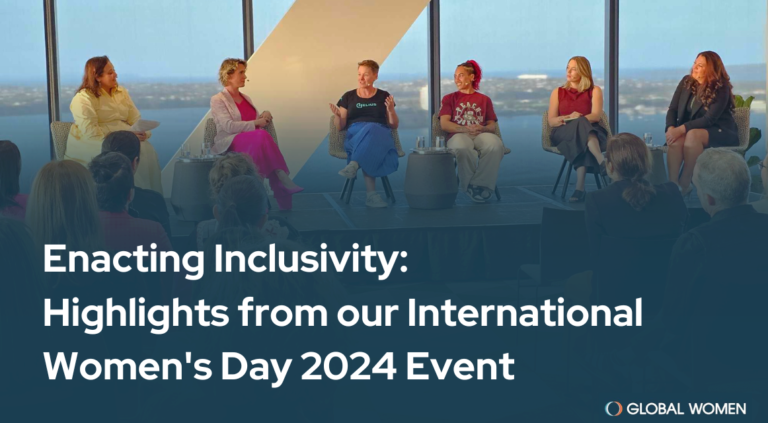
Enacting Inclusivity: Highlights from our International Women’s Day 2024 Event

For our International Women’s Day panel event, hosted in partnership with PwC, we were graced

For our International Women’s Day panel event, hosted in partnership with PwC, we were graced with the wisdom of six inspiring women from very different walks of life.

Our very own Global Women member Juliet Tainui-Hernandez facilitated an invigorating kōrero with five guest panellists, Judy O’Brien, Caren Doran, Mea Motu, Victoria Baldwin, and Dr Marcia Walker.

Focusing in on this year’s IWD theme of #InspireInclusion, the speakers together unpacked how we can better enact inclusivity in the workplace and our lives. The kōrero shared was funny, insightful, and at times deeply moving, with each woman sharing her personal experiences of equity, inclusion, and exclusion, in both life and work.

Over the course of the night, our speakers highlighted the importance of amplifying the voices of women who are often absent from decision-making spaces. They highlighted the need to ensure that voices are representative, but not tokenistic, and asserted the importance of maintaining inclusion and equity gains for underrepresented groups.

The speakers also addressed the need for all voices to be part of the conversation, laying down the challenge to diversify the audiences of future IWD events by encouraging more men to be in attendance. The importance of allyship and inclusivity in equity practice was acknowledged, as well as the need to alleviate the fear of displacement for those who already have a seat at the table.

It was a night of stimulating discussion and connection, during which we were also able to celebrate and honour the tenure of Mark Averill, PwC’s departing CEO and long-time supporter of Global Women.

With supporting waiata tautoko from Auckland Girls Grammar’s Kahurangi group, we were able to express our gratitude to Mark through mihi and the gift of a tāonga, representative of his humility, generosity, and power as a leader.

It was a beautiful opportunity to acknowledge Mark’s steadfast integrity and immense support over the course of his partnership with Global Women.


Theresa Gattung is on a Mission to Revitalise Mid-Life Dating in the Digital Age

In response to Aotearoa’s rising population of people living alone, Global Women Chair and Member

In response to Aotearoa’s rising population of people living alone, Global Women Chair and Member Theresa Gattung’s latest venture aims to inspire and empower those underserved by mainstream dating services.  

In an interview with Stuff’s Virginia Fallon, Theresa sheds light on the creation of Compatico, a matchmaking service for New Zealanders over 40. 

“A lot of women start a business to solve a problem, and I believe this is a problem I can solve,” says Theresa, who founded the service following her own experiences of mid-life dating. 

Research conducted by Compatico reveals that New Zealand women are less likely to use dating apps compared to men, and that single New Zealanders over the age of 45 are more likely to give up on dating apps altogether. While New Zealanders are often demoralised by current dating options, they have not given up on finding companionship. 

Women are disproportionately represented amongst Aotearoa’s population of single individuals over 45, with this gender disparity increasing in our older population. Amongst individuals over 65, the number of single women is double that of single men. These numbers are predicted to rise, with Stats NZ projecting a nearly 20% increase in the number of one-person households between 2018 and 2043. 

Compatico addresses this growing problem by providing a matchmaking service for mature singles that is private, secure, and personal.  

“Dating, and mid-life dating in particular, isn’t elegant and yet we like to have elegance in other parts of our lives – certainly feeling safe at a minimum,” says Theresa. 

The focus on client safety and comfort is woven throughout Compatico’s service. Clients are required to complete a detailed application form and undertake Ministry of Justice security checks before becoming members. An expert matchmaker then meets with the client to craft a unique personal profile for Compatico’s private database, accessible only to the matchmakers. 

Clients can choose between two membership tiers. Platinum members are assigned an expert matchmaker who actively looks for matches, provides feedback and suggestions, while Gold members are able to be approached by matchmakers about potential matches within the community. Each membership tier grants access to events, experiences, and services, carefully curated to inspire clients and build their confidence.

“What we’re doing is a personalised, professional and mediated version of your friends setting you up,” says Theresa. 

“If we can bring just a little bit more love into the world then surely that’s a good thing? Especially now when there really isn’t enough.” 

Read the full interview over on Stuff.co.nz  

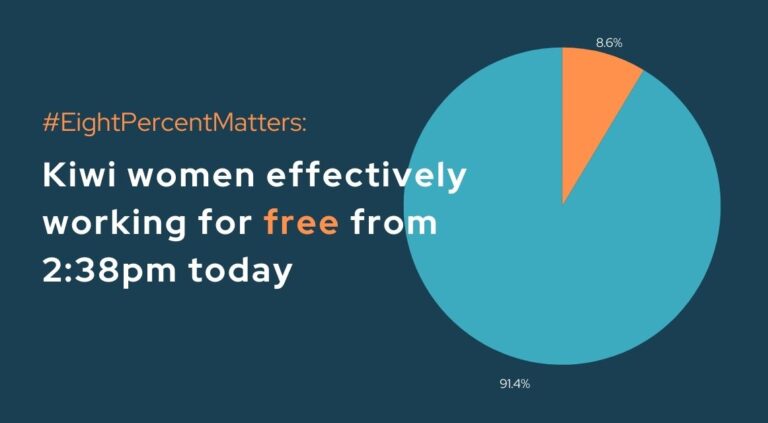
#EightPercentMatters: Kiwi women effectively working for free from 2:38pm today

#EightPercentMatters Today we are calling on all New Zealanders to reflect on the role they

#EightPercentMatters

Today we are calling on all New Zealanders to reflect on the role they can play in closing the gender pay gap with our “Eight Percent Matters” campaign.

Year on year, New Zealand’s gender gap has decreased by 0.6%, moving from 9.2% in 2022, to 8.6% this year. This is a positive shift, but it has only decreased the pay gap by 52 hours and 32 minutes in real terms.

This inequality is even worse for women of colour, with the pay gap between all men and Wāhine Māori, and between all men and Pasifika women sitting substantially higher at 14.2% and 15.2% respectively. This equates to Wāhine Māori having been “working for free” from November Thursday November 9th and Pasifika women from November 6th.

Although the year-on-year trends point to New Zealand making progress in closing its gender pay gap, the “Eight Percent Matters” campaign serves as a reminder to New Zealand society that although the pay gap figures may be seemingly small, they still have a significant impact on women’s lives.

“The year-on-year figures show positive signs that our gender pay gaps are closing. However, we can’t become complacent, as the gap won’t continue to close without sustained, intentional action, notes Theresa Gattung, Chair of Global Women.

“As a country we have come a long way in recognising the latent value of a diverse, equitable and inclusive workforce; however, the existence of the pay gap means more needs to be done.

“We want New Zealanders to use this day to talk about topics like pay equity and pay transparency with those around them – whether it’s asking HR about your organisations pay gap to revisiting your DE&I strategy in a leadership meeting. We need to keep challenging ourselves to do better until there is no pay gap to talk about.”

VISIT OUR CAMPAIGN PAGE FOR MORE

This #NoPayDay, we want to encourage organisations and individuals to:

1. Report and monitor their organisations pay gap: Unless organisations are aware of their current pay parity status – when it comes to both gender and ethnicity – they can’t fully understand the changes that need to be made. Organisations need to make a commitment to scrutinise and monitor any existing pay gaps and then make a plan to correct them.

2. Be transparent from day one: If salaries are kept secret this will often result with people being remunerated different amounts for the same job, in turn stifling social mobility and fuelling systemic inequalities. A progressive step to take here is to state a salary when recruiting. By advertising a role with a clear salary band this helps break the cycle on both gender and ethnic pay gaps – it will also stop you inheriting a pay gap from a candidate’s previous employer.

3. Join our movement and set your out of office: To drive conversation on the day we will be encouraging our members and networks to mark the day by setting their out of office message in line with our campaign. See here for a text template you can use. 


Calculating dates and times:

To calculate the dates and times official gender pay gap figures as sourced from Statistics New Zealand and overlaid them with the days of the year.

  • 8.6% of 365 (how many days in the year) is 31.39 days
  • 365 – 31.39 days is 333.61 days. This means the last day the average women is paid compared to men is the 333nd day of the year – which is November 29th.
  • Which means some time through the 334th day of the year – Thurs Nov 30th , women are working for free when compared to their male counterparts
  • Specifically – this means that at 61% through the 334th day of the year as women are only paid for 333.61 of the year women begin working for free from 2:38pm on Thursday 30th of November

Find reference data on the Ministry of Women’s website:

Pip Greenwood begins as Chair of A2 Milk

Global Women member Pip Greenwood adds an incredible new feather to her cap: Chair of

Global Women member Pip Greenwood adds an incredible new feather to her cap: Chair of The a2 Milk Company, as of this month. 

“With a proven track record and a wealth of experience as a Director in New Zealand, we are confident in her ability to lead a2MC into the next chapter of our journey,” notes The a2 Milk Company as Pip begins. 

“We are confident in her ability to lead a2MC into the next chapter of our journey.”

This comes a year after the announcement where Pip—an Independent director of The A2 Milk Company, Chair the Nomination Committee and member of the Remuneration Committee—was voted as Chairperson elect succeeding David Hearn. 

“Pip brings extensive commercial and board experience to The a2 Milk Company Board, shares The A2 Milk Company on their website. “A leader in the field of corporate law and in the New Zealand business community, she is the recipient of numerous industry awards including being named New Zealand ‘Dealmaker of the Year’ at the Australasian Law Awards 2018, an accolade she has won five times; and she has twice been recognised as a finalist at the Women of Influence Awards.” 

Also in Pip’s leadership kete are a number of impressive directorships—for many Global Women partner organisations, no less.

Also in Pip’s leadership kete are a number of impressive directorships—for many Global Women partner organisations, no less. Pip is the Chair of Westpac New Zealand, as well as on the boards of Fisher & Paykel Healthcare, Spark New Zealand. She previously was a senior partner at law firm Russell McVeagh, notably on the Board for ten years, was the Chair, as well as an interim CEO and Head of Corporate Advisory.

We have no doubt that Pip make great strides with and for The a2 Milk Company and we can’t wait to see what the future holds for our member.

Watch: Kiwi women say menopause negatively affects their work, 1news.co.nz

¼ women feel like their work capacity was halved during menopause. On the contrary, most

¼ women feel like their work capacity was halved during menopause. On the contrary, most employers, 98% to be precise, noted that they have no concerns about women’s performance during this time. 

It’s this—plus some—that was explored by 1 News from the research we shared in The Silent Transition Report, with ANZ and NZIER. 

“This is the first-ever in depth look at how menopause can affect Kiwi women’s economic engagement” — Theresa Gattung

Team members from Global Women Partners ANZ, Fiona Mackenzie, from Funds Management as well as Virginia Stracey-Clitherow, from ANZ Transformation, speak candidly about not just their experiences — but do so in the spirit of sharing how these chats can help colleagues navigate symptoms. 

Global Women Chair Theresa Gattung also speaks to this issue. “This is the first-ever in depth look at how menopause can affect Kiwi women’s economic engagement, allowing us to identify how employers can better support their wellbeing and productivity through the menopause transition.”

“I encourage all employers to look at ways to normalise menopause, identify ways to support their female employees, and provide guidance for managers so they can support their staff” —  Michelle Russell

“The cry here is to normalise conversations around menopause in the workplace,” notes Theresa to the camera.  

She is echoed by Global Women Michelle Russell, ANZ’s general manager of talent & culture who shares that “This research shows us the diverse nature of work in New Zealand presents some challenges. “But I encourage all employers to look at ways to normalise menopause, identify ways to support their female employees, and provide guidance for managers so they can support their staff.”

Watch the full news feature and kõrero from Fiona Mackenzie, Virginia Stracey-Clitherow and Theresa Gattung on 1news.co.nz here.

Menopause and the workplace: Theresa Gattung and Michelle Russell’s interview with NZHerald.co.nz

As part of our advocacy to get transparent about Menopause, our Chair, Theresa Gattung, gets

As part of our advocacy to get transparent about Menopause, our Chair, Theresa Gattung, gets candid alongside member Michelle Russell (of Global Women partner organisation ANZ)  in an interview with Cherie Howie of NZHerald.co.nz

We’re on a mission to normalise talking about this transition in the workplace. Alongside our report on the state of menopause conversations and workplace experiences in New Zealand, we’re firm believers that the success of this mahi involves walking the talk.

“Wild horses wouldn’t have dragged that word from my mouth” — Theresa Gattung. 

“Wild horses wouldn’t have dragged that word from my mouth”, notes Theresa, who was the CEO of Telecom at the time. 

“That’s a shift I think we’ve seen in the last couple of decades. Now, if I was a CEO going through menopause, I’d talk about it.”

“We’re not talking about menopause in our workplaces … the most important thing is that all of us normalise the conversation around menopause,” Theresa shares. 

“It’s a win for employers and it’s a win for the country, because we can’t afford to have people not contribute” — Michelle Russell

Michelle Russell, ANZ’s talent and culture general manager, notes the big picture—benefiting individuals, organisations and our nation alike—of this effort. “Keeping women my age in the workforce, who want to be in the workforce, it’s a win for employers and it’s a win for the country, because we can’t afford to have people not contribute,” she notes in terms of retention and wider equality and inclusion strategies. 

For ANZ, they note that menopause among the inclusions of their flexible working and sick leave policy, which allows for moments where staff either mentally or physically don’t feel fit to work. 

“The diverse nature of work in New Zealand presents some challenges, but I encourage all employers to look at ways to normalise menopause, identify ways to support their female employees, and provide guidance for managers so they can support their staff,” shares Michelle with Cherie Howie. 

Read the full interview over on NZHerald.co.nz

Is Australia moving one step closer to a menopause policy?

The current Australian Government has backed a motion for a Senate inquiry into the effects

The current Australian Government has backed a motion for a Senate inquiry into the effects on menopause. 

More specifically—yet also, broadly—the inquiry would encompass both perimenopause and  menopause, in a bid to look at how those who menstruate are impacted by the biological stages of life. 

People’s health and financial impacts would be under the spotlight, as well as the effects on the broader Australian economy.

“People experiencing physically and mentally debilitating menopause and perimenopause symptoms have for too long been forced to suffer in silence,” says Senator Larissa Waters, who is the Greens leader (the party that motioned this bid) in the Senate and the spokesperson for women.

This is fresh off the back of last week’s New South Wales’ Perimenopause and Menopause Toolkit launch. A free resource, which is designed to address the issues that women face by raising awareness in culturally and linguistically diverse communities.

This toolkit is part of a $37.3 million, four-year campaign designed to support people experiencing severe symptoms of menopause.

“People experiencing physically and mentally debilitating menopause and perimenopause symptoms have for too long been forced to suffer in silence,” Senator Larissa Waters.

“Women are sick of being invisible and their health needs neglected. We need good policy to address the economic, social and health impacts of peri and menopause,” says Senator Larissa Waters, who will move to establish the inquiry next week. 

The findings included in communications around the inquiry, published on Women’s Agenda, also painted a picture of the state of menopause’ effects on Australians and the nation. “Menopause costs female workers more than $17 billion each year in lost salary and superannuation and can cost Australian businesses more than $10 billion annually, according to the Macquarie Business School,” writes Olivia Cleal of Women’s Agenda. 

“Around 32 per cent of women in Australia are currently experiencing symptoms they attribute to menopause, which severely affects day-to-day life for at least one quarter of Australian women aged between 45-64, according to data from Jean Hailes,” notes Women’s Agenda.

“Menopause costs female workers more than $17 billion each year in lost salary and superannuation.”

The inquiry is designed to pick up on the momentum that’s out there from various bodies: Australian unions campaigns, and boosting awareness by GPs and patients of the system, and making treatments more affordable. 

It’s brilliant to see nations and governmental groups taking such immediate strides to make understanding—and action—for menopause. 

Locally, last month’s World Menopause Day is when we launched a campaign and custom-commissioned report to make workplace menopausal conversations transparent in a step to better the world, and workplace, for everyone. 

The inquiry is designed to pick up on the momentum that’s out there from various bodies: Australian unions campaigns, and boosting awareness by GPs and patients of the system, and making treatments more affordable. 

The Silent Transition was born out of a collaboration between Global Women Partners ANZ and NZIER, to understand the impacts on working women. Just like the movements in Australia, we hope that our communities can move to a place where no-one is left behind based on biology’s inevitable. 

We, like Australia’s Senator Waters hope this movement broadens the playing field for all. That, “similar to the family and domestic violence leave policy,” creates a baseline of equity. 

Transporting women’s leadership skills to new level

Thank you to Global Women partners, KiwiRail, for sharing these stories with our community. This

Thank you to Global Women partners, KiwiRail, for sharing these stories with our community. This article was originally published in issue 385 of KiwiRail’s EXPRESS publication.

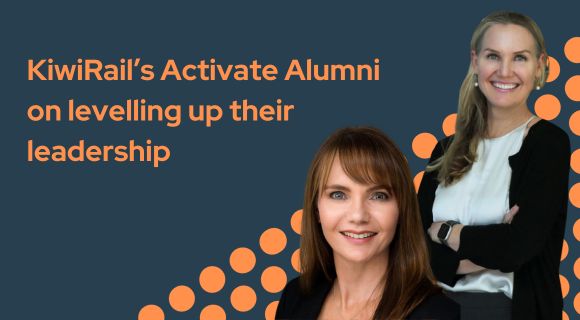
Engineering Civil Sector Manager Christina Hawk and National Resources Manager Racheal Fenton recently completed the prestigious Global Women – Activate Leadership programme. 

This is a course aimed at emerging women leaders from all different industries and backgrounds. They attended four full-day workshops in Auckland over the past four months. 

Christina says the course is about stepping up as a leader, what it takes to be a successful senior leader as a woman, the impact of authentic leadership, and how being clear on your personal purpose enhances your leadership impact. 

It also covers understanding how to build leadership influence, and determining how to use your ‘Executive Presence’ to enhance your impact to build a cohesive team. She says it was very flattering and exciting for her to be nominated to attend. 

“I have really enjoyed meeting other women professionals, and having meaningful, realworld discussions about our challenges and how to successfully work through them,” — Christina Hawk, KiwiRail

“I have really enjoyed meeting other women professionals, and having meaningful, realworld discussions about our challenges and how to successfully work through them.” 

Things she has learned range from practical office skills to taking the time to reflect on what leadership means to her, and how she can influence and impact others – “I’ve really learnt a lot.” 

When asked how this programme has helped in her work with KiwiRail, Christina says: “For a team to be productive and successful they need to feel like they are in a safe environment. There needs to be a level of trust and understanding, where opinions can be voiced, and constructive arguments are welcome. We are working to have that level of comfort for everyone within the team.” 

Racheal says she had a positive experience with the programme and gained valuable leadership skills, insights and tools, and a longterm supportive network of women leaders.

Racheal says she also enjoyed “creating a clear purpose and defining the difference you want to make; learning from leading business leaders and their experiences; and being part of a wider group of women leaders.” 

Racheal initially didn’t know about the programme until she received a congratulatory letter from Peter Reidy, informing her that she’d been awarded a place. “I was extremely grateful for the opportunity,” she says.

“I have loved being part of the programme and have taken so many things away that I can add to my ‘toolkit’ – a term they use.” 

Some of the benefits from the workshops included being inspired, challenged, and providing her with strategies and a best-practice leadership toolkit that will last a lifetime. Racheal says she also enjoyed “creating a clear purpose and defining the difference you want to make; learning from leading business leaders and their experiences; and being part of a wider group of women leaders.” 

She learned more about the incredible power of reflection – a powerful cognitive process that involves purposeful thinking, self-examination, and introspection. “It offers numerous benefits across various aspects of life, including personal development, learning, decision-making and great leadership.” 

Racheal also learned that being fiercely optimistic with a great attitude is a mindset that can have a profound impact on your life and the lives of those around you. “It involves maintaining a positive outlook and approaching challenges with enthusiasm and resilience.” 

‘When a light comes to your door, don’t blow it out’; ‘Get curious before you get furious’; and ‘There is nothing in nature that blossoms all the time’.” 

“Some key quotes from sessions were: ‘When a light comes to your door, don’t blow it out’; ‘Get curious before you get furious’; and ‘There is nothing in nature that blossoms all the time’,” — Racheal Fenton

“Some key quotes from sessions were: ‘When a light comes to your door, don’t blow it out’; ‘Get curious before you get furious’; and ‘There is nothing in nature that blossoms all the time’.”  

Racheal says prior to the first session they had prework, and that was to complete an Everything DiSC Agile EQ test. 

“This was a real eye-opener for me, not having done anything like this before. What it highlighted was the different mindsets of others, and that learning when and how to adopt each mindset will let us take an agile approach to our interactions with each other. It’s very powerful once you understand where, perhaps, your colleagues may reside within this dynamic cycle.” 

Racheal has always been a strong believer that trust is crucial in a team first and foremost, and that open and honest communication is important, as it forms the foundation upon which effective collaboration and great productivity are built. 

She is now eager to apply her newfound knowledge and share it with her team and the broader KiwiRail group, highlighting her enthusiasm for the journey ahead.