News & Media

“Sometimes courage is saying I’ll try again tomorrow” — Inside our Rotorua Women in Leadership Series

It was a full house in Rotorua for the last of 2023’s Women in

 It was a full house in Rotorua for the last of 2023’s Women in Leadership Series campfire chats by ANZ, Bay of Plenty and Regional Council. The seating was spilling out the door, and the excitement palpable to hear from the Mayor and the Captain.

Our two inspirational speakers — Tania Tapsell, Mayor of Rotorua and Angela Swann-Cronin, Captain at Air New Zealand — engaged the audience with their wisdom, insights and humility. Individually, their stories were captivating — but together provided a magnetic spirit.

“The Mayor shared experiences as a young school leaver finding her way and the value of service and helping others. Angela told us about her work with WINGS (Women Inspiring the Next Generation)”

Sharing their personal paths to where they are now in life, we heard stories of perseverance and determination. Angela and Tania’s passion for engagement, connection, empowerment, giving to others and positively influencing the world around them shone brightly through the entire kōrero. 

For example, the Mayor shared experiences as a young school leaver finding her way and the value of service and helping others. Angela told us about her work with WINGS (Women Inspiring the Next Generation,) the network of female pilots and engineers who are passionate about building a better future for women in aviation. Considering Angela was the first and remains the only Māori wahine pilot to graduate from the New Zealand Air Force, her wisdom was profound.  

“They reflected deeply on questions from the rangatahi (from four local high schools) who engaged instantly and with vulnerability at question time.”

In line with their community-fostering values, they reflected deeply on questions from the rangatahi (from four local high schools) who engaged instantly and with vulnerability at question time. “It was a special and humbling experience,” notes ANZ’s Sue Lund, one of the wāhine that helped make this event happen.  

Themes of listening, observing, empathy, trusting teams and paving the way for others in leadership roles. were explored. As for the qualities the speakers admired in others? Courage, kindness and a spirit shone through. 

Ruby Tui leading the charge in mental health and love, and Qiane Matata-Sipu, the author of “Nuku – Stories of 100 indigenous women”, leading change by telling the stories of 100 indigenous wahine.

“It’s not about being the loudest voice in the room.  It’s about being the voice that resonates and connects with everyone and enables solutions for everyone to act on.”

Of course, equity was a key talking point. “Putting the ladder down to pull other women up with you and getting another woman in the jump seat,” was mused on, in the spirit of recognition that sometimes people need more support than others. 

“Sometimes courage is the courage to say I’ll try again tomorrow,” was another notable quote, when speaking to the power of hope. “Things that make you different are your strengths,” provided a point for inward reflection, alongside the idea that “it’s not about being the loudest voice in the room.  It’s about being the voice that resonates and connects with everyone and enables solutions for everyone to act on.”

It was a great pleasure to receive such incredible feedback. Notes like “thank you for hosting, along with ANZ what was an incredibly inspiring evening. I’ve been reflecting on insights all day from the kōrero and was so warmed by how genuinely sincere and authentic both speakers were,” and “the only thing I felt last night was missing was a few hundred more sets of ears to hear and help spread the knowledge and wisdom of these wahine toa,” reminded us of the powerful reason we host these hui. 

Thank you to Global Women Partners ANZ and Bay of Plenty Regional Council for your generosity in hosting, as well as speakers Tania Tapsell, Angela Swann-Cronin and moderator Cassandra Crowley. 

It’s time to normalise menopause in the New Zealand workplace.

Me aro ki te hā o Hineahuone “Pay heed to the dignity of women”  

Me aro ki te hā o Hineahuone

“Pay heed to the dignity of women”


Change is not just inevitable, it’s what weaves the fabric of our lives together. 

Organisationally, change centres us while providing direction. Culturally, it’s what we respond to. 

Change is what garners results, affects communities, paves a path. Equally, it pays dividends, lands awards, achieves goals. Our communities aren’t just used to change, we thrive on it — and it’s our movements that make it part of the zeitgeist.

Yet, there’s one change still uncovered by corporate Aotearoa. A change that affects half of our workforce — at a critical time in their career, no less. 

That is menopause.

We at Global Women, along with partners ANZ and New Zealand Institute of Economic Research (NZIER), acknowledge the knowledge gap around menopause in the workplace that needs to be addressed. It’s a natural stage of life, part of the experience for most working women, yet there is still very limited understanding on its impacts in the global sphere, let alone locally. 

As with all our advocacy, it is our hope that new information becomes a platform for change. We hope to fill this knowledge gap this World Menopause Day (18 October 2023) with nuanced insights into the menopause experience for female employees and employers. 

Menopause in the workplace is not simply a women’s issue. We’ve seen how opening the aperture on topics such as parental policies, domestic violence leave, pay equity and broader diversity efforts paves the way for recalibrations and reconsiderations for all. 

It’s clear that discussions around menopause are needed. Promisingly, it’s a topic that half of managers’ report being “very comfortable” talking about. Still, 40 percent of employers felt they needed to know more about it — a number that steeply lowers when asking male managers. 

Understanding is the first stepping stone to equality. Increased knowledge is essential for an inclusive workplace where gender equality flourishes. Acknowledging the changes helps eliminate gender bias and ensures equal opportunities for career development.

Peeling back the layers reveals an issue broader than simply understanding menopause. We must consider exactly how our workplaces are set up, and how this impacts different communities. 

42% of women in female dominated industries who didn’t ask for menopause-specific adjustments because they knew they couldn’t be accommodated. It’s a fact mirrored by one in three employers, who state it’s not possible to offer any adjustments to their way of working. 

An intersectional lens is a must when discussing menopause — something we’re grateful our research has captured, specific to Aotearoa

Māori women were also nearly 50 percent more likely than average to report feeling less physically able to do their work during menopause. Alarmingly, they were 50% more likely to reduce their work hours or take extra leave (75%).

Despite the alarming facts, it’s this calibre of nuance that Global Women, ANZ and NZIER, are proud of sharing with wider Aotearoa. 

As we continue our advocacy, it is this lens that we look forward to applying across a wider range of themes and topics that pulse-check the state of women’s advancement and equity across Aotearoa — in the form of a report, produced with our partners.  

Poetically, the theme of the report may change year upon year. Exploring how we can better understand the issues that face the women of Aotearoa New Zealand will be our north star. That, and our overarching mission to advance women, every day.

We invite you to join us. With each new learned idea, we put one foot in front of the other. Together, we come to a place of understanding that sparks action.

If not now, then when? And if not us, then who?

Champions for Change and Global Women Members are officially on Aotearoa’s first 15 squad

With awards season’s full bloom coming to a close, we’re thrilled to see some of

With awards season’s full bloom coming to a close, we’re thrilled to see some of our community spotlighted for their skills as CEOs. 

This time, however, it’s not an awards dinner or certificate that marks their prowess. It’s an addition to a special (albeit fictional) rugby team

10 members of the Global Women community have been officially handpicked by NZHerald, in a mirroring of the nation’s excitement at the Rugby World Cup, with one goal in mind: to take on the rest of the world in business

Global Women agrees with writer (and team coach, in this context) Duncan Bridgman that these are the leaders “capable of bringing home the silver.” 

So who exactly has made the first XV? Here are the Global Women members, CEOs of our Partner organisations and the Champions for Change that have been rounded up to make our nation proud: 

Greg Foran, CEO of Air New Zealand: Fullback. Noted as someone who has “has adapted his game well.”

Jason Paris, CEO of One NZ: Right Wing. commended for not being afraid to go after what he believes is right and considering One’s recent rebrand, not afraid to pivot and adapt as necessary. 

Arihia Bennett, Global Women Member and CEO of Ngāi Tahu: Centre. Picked for having “all the attributes of a great centre: experience, power and mana.” She’s “a dynamic leader in the backline who creates space and opportunities for her teammates.”

Carrie Hurihanganui, a Global Women member herself as well as CEO of a Partner organisation, Auckland Airport: Left Wing. “Hurihanganui has been through the highs and lows of the aviation industry, moving from Air New Zealand to the airport at a challenging time” — which you  can read more about her fantastic journey from part-time cabin crew to COO here.  

Sophie Moloney, a Global Women member herself as well as CEO of a Partner organisation Sky TV: Halfback. “She provides a direct link to a huge audience and a valuable connection to team sponsors. Has fought hard against strong competition.”

Miles Hurrell, CEO of Fonterra: No. 8. Noted as having done well and no stranger to a strong challenge. 

Jolie Hodson, a Global Women member herself as well as CEO of a Partner organisation Spark: Blindside flanker. “Has experience playing alongside Paris and Moloney and has adjusted accordingly. Keeps the opposition guessing.”

Ross Taylor, CEO of Fletcher, Lock: can perform under pressure and who’s “brought some muscle to the pack.”

Of course, let’s not forget some of the incredible reserves. There’s ANZ’s CEO Antonia Watson, a Global Women member and Champion for Change who “Recharges the pack with interest” as well as Partner Organisation, PwC’s John Fisk for “When you need to change the game plan.”

Also important to the game plan are the officials, in particular the referee who is none other than Global Women Member Samantha Barrass, chief executive of the Financial Markets Authority. 

With such a well-crafted team, we can’t help but imagine the success they’d bring on and off the court. 

Read the full coach’s notes online at NZHerald.co.nz for the full line-up. 

Champions for Change Summit: Pioneering Inclusive AI in Aotearoa

  The recent Champions for Change Summit brought together leading minds in Artificial Intelligence to


The recent Champions for Change Summit brought together leading minds in Artificial Intelligence to explore the promise and challenges of AI in Aotearoa, New Zealand. Hosted by MinterEllisonRuddWatts, the summit delved deep into the transformative power of AI and the responsibilities it entails. In the age of rapid digital transformation, this gathering of experts, including Technology Futurist Ben Reid, Madeline Newman of AI Forum NZ, Hayley Horan of Te Pūkenga, and moderator Jarrod Haar, set out to discuss how AI can be harnessed to improve lives inclusively.

AI’s Profound Impact:

Artificial Intelligence has been making waves across various industries, offering immense potential to enhance the lives of people within our communities. However, it has become evident that the promise of AI as a force for inclusive progress is still in the making. With OpenAI, Microsoft, and Nvidia at the forefront, organisations are confronted with the need to navigate both operational and ethical aspects of AI, including large language models and machine learning.

The Ethical Imperative:

While operational challenges are pressing, ethical concerns loom even larger. As technology advances at an unprecedented pace, regulations struggle to keep up. Consequently, it falls upon companies to ensure the safe and ethical deployment of AI tools, minimizing harm to stakeholders and society at large.

Navigating AI’s Impact:

Every company, regardless of its industry, must confront questions regarding the application of emerging AI technologies. Some may need to pivot their operating models significantly, while others will seize the opportunity to scale and diversify their offerings. Yet, all must assess their readiness to deploy AI responsibly, striving to bridge gaps rather than perpetuating inequities.

AI’s Role in Inclusion:

During the summit, Technology Futurist Ben Reid emphasised that AI is mediating reality for us. With generative AI being multimodal, it offers a remarkable degree of malleability. Matt Prichard highlighted the potential of AI to look for inequities and design solutions to address them. “AI can be told to look for inequity, and to design itself to address inequity. We have that power in the way that we implement AI, he says” Aotearoa, with its small yet dynamic population of five million, possesses a unique advantage in leveraging AI technology for the advancement of all its people.

Championing Inclusive AI:

While AI undoubtedly brings benefits, it also raises concerns about rising inequalities. As history has shown, those who control transformative technologies tend to rise rapidly, leaving some behind. The challenge for our Champions and their organizations is to integrate AI with an unwavering commitment to equity. This means considering not only how AI can benefit their operations but also how it can positively impact society as a whole.

The Champions for Change Summit showcased the critical juncture at which we find ourselves regarding the use of AI. It is not just here to stay; it is here to evolve exponentially. With thoughtful leadership and a dedication to inclusive AI, Aotearoa is uniquely positioned to shape the trajectory of AI for the better. As we continue to grapple with the questions and challenges posed, one thing remains clear: AI must be harnessed as a tool for inclusion, not a pathway to inequity. Thanks to the insights shared by Ben Reid, Madeline Newman, Hayley Horan, Jarrod Haar, and the entire cohort of Champions, we are one step closer to achieving that vision of an equitable AI-powered future.

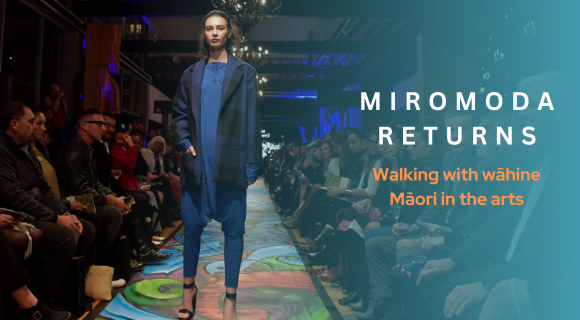
Walking with wāhine Māori in the arts

With New Zealand Fashion Week’s triumphant return to our nation in August this year, creatives

With New Zealand Fashion Week’s triumphant return to our nation in August this year, creatives of all fields are set to be part of a moment that attracts the eyes of the world.

From the collections gracing New Zealand Fashion Week’s catwalks, through to the myriad talents crafting every last detail that upholds this moment, this moment is a true display of the power of the collectives.

We’re lucky to have many of our Members—and even Partner organisations—involved in New Zealand Fashion Week’s workings and the wider fashion community. As sponsors, as dot-connectors, and of course as designers showcasing their collections.

To celebrate this spirit of collaboration, we talked to Ata Te Kanawa, of Miromoda, the Indigenous Maori Fashion showcase that’s been an anticipated staple since 2009, about this year.

“Some, but not all of the designers who have passed through the Miromoda stables, have had the luxury of referencing their unique culture.”

Corporate hosting opportunities are available at this year’s Go Media Miromoda show, please contact ata@miromoda.com for more on this opportunity. 

How does a fashion show extend the sacred art of storytelling?

Storytelling is not sacred to our culture, we proactively tell and share stories as a means of keeping our whakapapa links known throughout generations. Some, but not all of the designers who have passed through the Miromoda stables, have had the luxury of referencing their unique culture, and in fashion, looking at, or for design narratives, themes is ultimately what all designers seek.

“I like the fact that the designers are almost guaranteed to influence new generations of Māori fashion designers and followers.”

In what ways can people ensure they are supporting wāhine in the arts?

I have it on good authority, as well as from experience, that ‘fashion’ is not always considered art, possibly because of its commercial aspect, although art survives by sales too, albeit modestly in most cases. Supporting niche fashion designers is more readily available through curated websites which is always more cost-effective than bricks and mortar for emerging and new online design stores.

What are your hopes for the designers taking part this year?

Fashion Weeks and indeed the industry have changed over the past decade to appeal to the online customer, and the trade business. Both co-exist reasonably well. I know the exposure Miromoda designers gain at NZ Fashion Week, as well as the experience, are things they would not otherwise be able to afford, or achieve, without Miromoda. I like the fact that the designers are almost guaranteed to influence new generations of Māori fashion designers and followers.

The talent crisis Kiwi businesses are sleepwalking into

Our Champions for Change’s findings have made one thing clear: it’s time for Aotearoa New

Our Champions for Change’s findings have made one thing clear: it’s time for Aotearoa New Zealand to ensure its organisations are taking into account the changing face of our country

It’s this very thought that has seen our community featured in nzherald.co.nz.

 “New Zealand’s changing demographic makeup means that businesses will need to put the building blocks in place now or risk facing a talent crisis in the future,” shares NZ Herald’s Damien Venuto, host of The Front Page podcast.

Soon 35% of the potential workforce currently under 14 will identify as Māori.

This is off the back of Antonia Watson’s note (ANZ chief executive, member and Co-chair of the Champions for Change) where shares that soon 35% of the potential workforce currently under 14 will identify as Māori.

“If we haven’t got pathways for them to come into the workforce and get to the senior roles, then we won’t have any workers left… We need to make sure that our organisations are thriving in the future.”

“Māori, Pasifika, Asian, they all have to feel like they belong. New Zealand is set up for a lot of problems if we don’t acknowledge that reality,” Theresa Gattung

Debunking the idea that giving opportunities to minorities is taking away from Pākehā, our chair Theresa Gattung says: “The demographics are clear: the population is ageing. But the Pakeha fertility rate is much lower than the Māori and Pasifika rates. Currently, only 25 per cent of those over 65 are still in paid employment – and even if you believe that percentage may increase over time and that more of us will keep working, you’ve still got a situation where it’s a largely Pākehā older population and largely younger growing percentage of Māori and Pasifika.”

“Māori, Pasifika, Asian, they all have to feel like they belong. That they can bring their best selves to the workplace. New Zealand is set up for a lot of problems if we don’t acknowledge that reality,” shares Theresa.

“Be more open-minded rather than defaulting to a combative stance and trying to protect their turf”

So what advice is offered to business leaders? “Be more open-minded rather than defaulting to a combative stance and trying to protect their turf,” notes Damien Venuto. 

The issue—and opportunity—is bigger than ourselves. 

Be open to what we might be able to create in the future,” shares Theresa. “Whatever you believe about the Treaty, whether it’s the Māori of the Pākehā version, whether we’ve gone too far in reparations or not far enough isn’t the focus in this.”

As Damien notes, these words “implicitly require businesses to become less defensive and open up to the reality that there might be a better way to do things – and that’s even harder to do when you’re facing enormous economic pressure.”

Read the full scoop, including Damien’s full interview with notes on forward-thinking, the “best person for the job” equation, and more insights from our Champions for Change insights on nzherald.co.nz.

Theresa Gattung on the $32b gender investment gap

One of Aotearoa’s most prolific angel investors—not to mention, our Global Women Chair—Theresa Gattung is

One of Aotearoa’s most prolific angel investors—not to mention, our Global Women Chair—Theresa Gattung is shining a light on the lack of investment towards female founders.

This comes as a new report designed to look at the state of venture capital funding was initiated and funded by Theresa and fellow investor and entrepreneur Jenny Rudd.

The report showed that for every 100 start-ups it invested in, 11 were founded by women.

Aotearoa New Zealand was missing out on $32 billion worth of economic growth

It’s not just women missing out. 

Aotearoa New Zealand was missing out on $32 billion worth of economic growth and job creation — a shocking statistic recently highlighted in Madison Reidy’s article on www.nzherald.co.nz

The trend compounds when looking at the public sector. For every 100 start ups the Crown’s New Zealand Capital Growth Partners (NZCGP) invested in, seven were founded by women — compared with 72 by men and 22 of mixed-gender ownership. Madison Reidy notes the latter is typically a couple.

“…when [women] get further down the line, the capital is allocated differently” — Jenny Rudd.

“I’m disappointed, but not surprised,” shares Theresa Gattung on the findings. 

“I actually don’t think that women have better ideas, or men have better ideas, that would be crazy to suggest that they do. It’s just when they get further down the line, the capital is allocated differently,” shares Jenny Rudd.

It’s an issue that can spark progress from many directions. Theresa notes that as investors, they are part of the equation and hold a key to the solution. “We’re not pointing the finger,” she notes in her kōrero with Madison Reidy

“If women don’t agitate for women, don’t fight for women, we can’t expect men to do it” — Theresa Gattung

Reporting on the gender make up of each business an investment fund invests in to ensure no more than 60% percent was an idea the duo had to improve the equity of investment. 

“This is an opportunity,” Theresa shares. “If women don’t agitate for women, don’t fight for women, we can’t expect men to do it.”

Read the full interview and discover more findings on the gender Investment gap in New Zealand thanks to Madison Reidy’s article on www.nzherald.co.nz

Top CEOs warn: Businesses need to take DE&I seriously now – or be left behind

Mā mua ka kite a muri, mā muri ka ora a mua   Champions for

Mā mua ka kite a muri, mā muri ka ora a mua


Champions for Change, a collective of over 80 leading CEOs and Chairs, are warning New Zealand business leaders that they will fall behind if they are not taking steps to prioritise diversity, equity and inclusion now.

This one of the loudest echoes in the freshly-launched Lighting the Pathway to Change — the annual insights on Diversity, Equity and Inclusion Impact by the Champions for Change, which has launched on 13 July 2023. 

The Champions track their progress year upon year through this report, demonstrating the group’s commitment to transparency and accountability in line with the collective’s joint Kaupapa and workstreams.

“Businesses who are not creating working environments… that are attractive to the full talent pool of our country may soon flounder”

The Champions tracks its member’s progress against a number of key DE&I measures.

It’s these very measures that have created this cautionary note for all of Aotearoa New Zealand’s organisations. 

Our rapidly changing demographic profile means that businesses who are not creating working environments, business models, policies and cultures that are attractive to the full talent pool of our country may soon flounder.

The good news is that there are plenty of ways organisations can open their apertures to new, improved and ultimately equitable ways of operating — ones that both enhance their competitiveness advantage while remaining relevant to the shifting landscape.

With the Champions continuing to report shifts as a collective. Key figures from this year’s report include:

  • Champions for Change reported a 2% YoY increase as a collective of women on boards this year
  • This is an increase from increase from 37% in 2022 to 39% in 2023
  • 14% more Champion organisations now have at least 40% of women on boards compared to last year (54% overall)
  • 28% of Champions organisations have female CEOs, this is up 2% from last year
  • This compares favourably to NZX50 organisations who only have 12% female CEOs or 6 out of 50
  • Champions organisations are also reporting a higher proportion of ethnically diverse people than the NZ population

“We can’t be creating our businesses based on what’s worked in the past or what’s even working now. We need to be looking at the future” — Antonia Watson, CEO of ANZ New Zealand and Co-Chair of Champions for Change.

Antonia Watson, CEO of ANZ New Zealand and Co-Chair of Champions for Change says:

“The principles of diversity, equity and inclusion is important to Aotearoa New Zealand because of the incredibly diverse society that we are, and that we’re becoming even more so by the day.

“We can’t be creating our businesses based on what’s worked in the past or what’s even working now. We need to be looking at the future – who are our future workforces, what do they value, how can we inspire them and enable them to reach their potential – and make those changes now.”

“They’ll probably need to ask themselves some uncomfortable questions and look at some uncomfortable figures – but that’s progress.”

“To do this, leaders need to have a laser-focus on DE&I and scrutinise how these values show up in their workplaces. Where are the gaps – literally, they’ll probably need to ask themselves some uncomfortable questions and look at some uncomfortable figures – but that’s progress.”

“As a people, I truly believe that we have a real sense of fairness and see the importance of giving everyone a fair shot” — Matt Prichard Executive Chair, KPMG and Co-Chair of Champions for Change

Matt Prichard Executive Chair, KPMG and Co-Chair of Champions for Change says:

“The businesses that will thrive in the next few years will be those who have actively taken the steps to ensure their business is fit-for-purpose to employ and service the New Zealand of the future.

“As a people, I truly believe that we have a real sense of fairness and see the importance of giving everyone a fair shot. This means we want to foster workplaces where everyone has the opportunity to thrive and grow and feel like it’s a place where they belong.

“The progress Champions for Change members have achieved in their organisations and businesses over the years shows how impactful an intentional focus on diversity, equity and inclusion can be. I hope this spurs more businesses and organisations to join us in our mission.”

This years’ Champions For Change ‘Lighting the Pathways to Change’ Diversity and Inclusion Report 2023 can be found here: https://championsforchange.globalwomen.org.nz

The new Aotearoa: Champions for Change on the New New Zealand demographic

Did you know that by 2043, New Zealand’s then six million-strong population will represent a

Did you know that by 2043, New Zealand’s then six million-strong population will represent a demographic that’s 25 percent Asian, 21 percent Māori, and 11 percent Pacific? 

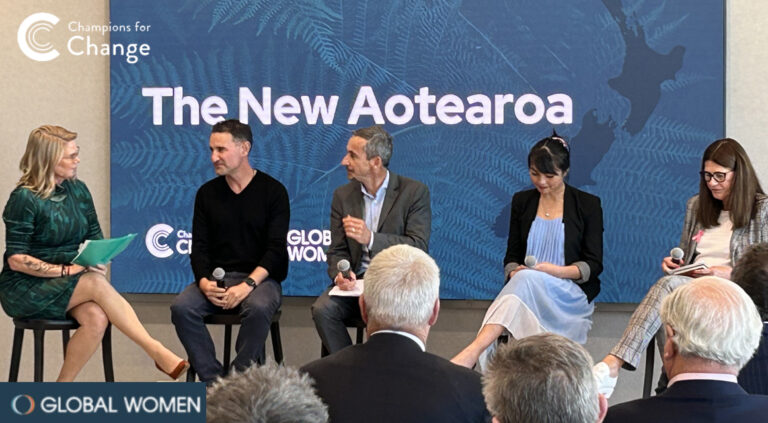
It’s this very shift that was spotlighted by the Champions for Change as they came together for the first summit of the year in May. 

How as a collective can we harness the changing face of the communities we employ and serve? How can we design workplaces that are adaptive to a much more diverse community and customer base? How can we shift away from what has served us well in the past, and supercharge a future-focused way of being?

Embracing, including and retaining diverse talent is no longer the right thing to do. It’s fundamental.

One thing was certain among these discussions: embracing, including and retaining diverse talent is no longer the right thing to do. It’s fundamental.

With this in mind, we brought together a mix of experts to share their insights and provoke questions on what this means. 

Just how rapidly is the demographic profile evolving? Professor Emeritus Paul Spoonley discussed this in depth with a presentation of interesting findings. 

How could we make Auckland, a super diverse city, more connected as an ecosystem and as a destination for diversity? 

It was then over to Global Women Member, Dr Hinemoa Elder to expertly moderate a panel where Dan Te Whenua Walker (Global Co-Chair of Indigenous at Microsoft), Dr. Angela Lim (CEO and Co-Founder of Clearhead), Dominick Stephens (Chief Economic Advisor, The Treasury) and Justine Smyth (Chair, SPARK) shared perspectives. 

With many insights shared, more questions were inspired. 

Community was at the heart of the kōrero. “How to attract people using existing employees was an interesting idea, and using the unique characteristics of each business was something to explore further,” notes Dr Hinemoa Elder. This was also echoed in conversations about the interface between the young workforce and older workforce staying on longer.

There was of course a geographical element. How could we make Auckland, a super diverse city, more connected as an ecosystem and as a destination for diversity? 

The spirit of connection also was present in questions about industries. How can we build links between the corporate world and public service/government emerging to keep our industries prepared and prosperous?

Inside our Women in Leadership Series Whakatāne

  What piece of wisdom would you write on a postcard, for a young woman


What piece of wisdom would you write on a postcard, for a young woman new to your organisation to see? 

This is just one of the questions asked in Global Women’s latest fireside Women in Leadership Series event, in Whakatāne on May 4. 

“Focus on the future and jump.

“Jump. Do it and don’t overthink,””Be the future, be the example you want the world to be,” was mused by our attendees. 

“Don’t take a decade to find your confidence,” was followed by, “SHINE — be yourself fully, loudly and proudly.” “Interview your potential employer too,” came as a reminder. 

“Jump. Do it and don’t overthink”

This moment of reflection echoes the event’s co-host, ANZ New Zealand’s, Watch Wāhine Win Report.

Here, they asked Māori, Asian and Pasifika women this very question as part of an effort to understand how they can better set up Kiwi women to succeed. 

Kirsti Luke, CEO at Tūhoe Te Uru Taumatua, and Vicky Robertson, CE & Secretary, Ministry for the Environment 2015-2023, along with expert facilitator Cassandra Crowley, steered an inspiring conversation where no leadership stone was left unturned. 

“Our aim is to strengthen others. If we are holding the trophy at the end we have done it wrong.”

The future was at the centre of the kōrero. 

Long term thinking —and how it is needed now— was a key point, with the idea of “our prosperity can only be measured by what we hand to the next generation.”

This encompassed the issues facing indigenous people, ensuring a smooth entry for hapu into the future, intergenerational leadership leads and guides when times are tough, building capability and finding purpose to bring everyone together.

“If helping another wahine feel that way isn’t leadership I don’t know what is,

The idea that winning as a community happens when everyone is a leader was strong, after all “our aim is to strengthen others.  If we are holding the trophy at the end we have done it wrong.”

“If helping another wahine feel that way isn’t leadership I don’t know what is,” says one attendee as our event wraps up. With feedback that the event left attendees “feeling uplifted and inspired,” we’re proud to have had everyone engaged in this korero and looking forward to hosting more. 

Thank you to ANZ, Bay of Plenty Regional Council and our speakers Kirsti Luke, Vicky Robertson, Cassandra Crowley as well as the audience for your brilliant, bold involvement in this series. 


Feedback from our incredible attendees:

“What an inspiring event. Fantastic to hear from these phenomenal wahine. The audience was full of amazing women leaders too. Any one of them could have been on the panel.”

“Wasn’t it a great evening! Very inspirational and wise words from two fabulous wahine.”

“Thanks so much to Bay of Plenty Regional Council, ANZ, and Global Women for putting these events on. It was a wonderful opportunity to reflect on the common threads in the very different experiences of Vicky and Kirsti.”

“This was a fabulous evening, hearing the wisdom of two wonderful wahine!”


Mā whero, mā pango ka oti ai te mahi 

With red and black the work will be complete

New Zealand’s First Parental Leave Register is Officially Live

New Zealand’s first ever Parental Leave Register is live as of Tuesday 20 May. To

New Zealand’s first ever Parental Leave Register is live as of Tuesday 20 May. To say hit the ground running would simply be an understatement.

With 500,000 employees under the umbrellas of the organisations who have signed up—that’s 1 in every six employed New Zealanders, for context—it’s safe to say the launch is looking bright for Crayon, the local organisation behind the registry.

We talked to Stephanie Pow, Founder and CEO of Crayon, ahead of the registry’s upcoming launch to hear about the crescendo of sign ups, what has developed since our first kōrero in December last year, what it means for today’s employers and employees.

What has the response to Crayon’s registry been like in the last few months?

The response has been overwhelmingly positive, to our great delight (and relief!). At launch, over 180 employers are represented on the register, covering more than 500,000 employees, or 1 in every 6 employed Kiwis. They range from organisations with 4 employees to 40,000+ and include eight of NZ’s largest 10 employers.   

“At launch, over 180 employers are represented on the register, covering more than 500,000 employees, or 1 in every 6 employed Kiwis.”

What do you think was key to this momentum?

From the start, we knew that for aspiring and expecting parents to truly be able to use the register to plan for parenthood, the information had to be verified and at a level of detail that was unprecedented globally. 

“To truly be able to use the register to plan for parenthood, the information had to be verified and at a level of detail that was unprecedented globally.”

The only way to achieve that was to work constructively with employers. Our goal is that every employer is represented completely, accurately and positively on the register — regardless of whether they offer the statutory entitlements or the full bells and whistles. We made deliberate choices to encourage every employer to join. For example, employers are listed in alphabetical order, and website visitors can filter by industry and employer size but not by benefits. 

Why is it important for companies to sign up now more than ever?

It’s simple: to attract and retain talent. 

We’re still in a tight labour market, and by joining the register, an employer is signalling their commitment to transparency and their support of working parents —  two traits that are highly valued by job seekers. 60% of candidates who want to ask about an employer’s parental leave policy hold themselves back — when they needn’t be in that position in the first place. 

“We also hope that the register offers employers the chance to work together and learn from each other about what entitlements are most beneficial to employees”

Not only that, having a child is a big life change and a very expensive one! In fact, 70% of expecting parents report experiencing financial stress (AMP Financial Wellness Survey). And financial stress isn’t just bad for employees, it’s bad for employers too. Employees under financial pressure are twice as likely to look for a new job (Salary Finance) and miss an extra 16 days of work each year, on average (WTW).   

The more employers can help employees navigate this stage of life, for example, by making their parental leave policies publicly available, the more likely employees are to do well at home and at work.  

We also hope that the register offers employers the chance to work together and learn from each other about what entitlements are most beneficial to employees, how they can get creative with benefits and how to ensure policies are inclusive and celebrate diversity in our workplaces.    

“There were so many things I didn’t know about parental leave when I had my first child — information that would have led to different choices”

What are you most proud of at the moment?  

That we’re sparking an open conversation around parental leave! There were so many things I didn’t know about parental leave when I had my first child — information that would have led to different choices. My big hope is that fewer parents face those surprises because now we’re talking about it. After all, parenting comes with enough challenges as it is!  

Have you noticed any interesting trends from those signing up?

First, parental leave policies are developing and changing all the time. Even in the five years since I was pregnant with my first child, the offerings have changed markedly. Employers continue to modify them based on the needs of their specific workforce, and there are a number of employers planning to join the register once their new policies have been rolled out.

Second, while paid Primary Carer leave is what usually makes the headlines — and it is valuable – employers are increasingly recognising the role that partners play. More and more employers offer full pay for the two weeks of statutory partner leave. And a few employers have begun offering equal primary carer and partner leave to give both parents the chance to stay at home with their newborn. It’s by no means a standard offering in NZ, but it’s interesting to see some employers following the lead of Scandinavian countries.

Third, we’ve also been struck by the long tail of employee benefits, especially from smaller employers. From phased returns to work, child care assistance, extra sick days, cleaning services, meal packs and access to parenting courses, employers have been creative with affordable ways to support working parents.

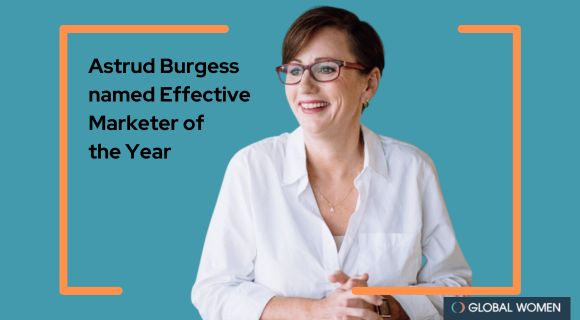
Astrud Burgess named Effective Marketer of the Year at Effie Awards

What can Australia’s pay gap publishing bill mean for Aotearoa?

Australia has officially passed a bill through parliament that will help ensure the reporting of

Australia has officially passed a bill through parliament that will help ensure the reporting of pay gaps. 

All organisations with 100 or more staff will, as of early 2024, need to publish the gender pay gaps in their midst thanks to the passing of the Workplace Gender Equality Amendment (Closing the Gender Pay Gap) Bill 2023. 

The pay gap data will be publicly published on the Workplace Gender Equality Agency (WGEA) website, alongside guides and resources to help employers take action. 

Four and a half million Australian employees will now get greater clarity on their employers’ pay gaps.

Four and a half million Australian employees will now get greater clarity on their employers’ pay gaps, considering this measure covers around 40% of the nation’s workforce.  

Considering the current Australian pay gap sits at around 22.8%,*  women on average earn $26,596 less than men a year, only 22.3% of Australia’s CEOs are women and 1 in four organisations have a gender-balanced leadership team, this is a welcome step in levelling out the figures. 

…Over half of Australian employers carried out a gender pay gap analysis this year. However, of those, 40% took no action as a result.  

Like many pay gap reforms and bills around the world, the goal was to not only reform but also spark action through transparency. “That is why an essential part of the legislative reforms is to give employers the option to provide a statement that gives context to their gender pay gap results and outlines their plans for action,” shares Workplace Gender Equality Agency (WGEA) CEO, Mary Wooldridge, on the matter.

Locally, we’ve seen efforts to encourage voluntary pay gap reporting, as well as encouraging similar legislative commitments to Australia’s passed bill — top of mind being MindTheGap NZ and their Public Pay Gap Registry, created by many Global Women Members.

Closer to Global Women, the Champions for Change, a local collective 80 leading CEOs and Chairs of New Zealand organisations, are reporting their own organisational pay gaps—among myriad other data—in their efforts to accelerate inclusive and diverse leadership in our workplaces.

A touch over half of Australian employers carried out a gender pay gap analysis this year. However, of those, 40% took no action as a result.  

It’s clear much of the responsibility rests in the hands of employers to do the internal dot-connecting, matched with strong equity-focused structures to reap the benefits that this bill intended. 

[Increasing] the number of women in leadership was the most common goal. Less popular among employers, were setting targets to increase the number of men taking parental leave or to increase the number of men in female dominated roles. 

Internal strategies are a must, by this bill, for some organisations: employers with 500 or more staff will need a policy or roadmap for each of the six Gender Equality Indicators. 

Some businesses— precisely 53%—of those filing reports in 2022 have set targets on their own. WGEA reports that increasing the number of women in leadership was the most common goal. Less popular among employers, however, were setting targets to increase the number of men taking parental leave or to increase the number of men in female dominated roles. 

Interestingly, orbital bills in Australian politics suggest that the increase of paid parental changes and access to cheaper childcare are on the legislative horizon.  

It’s clear that a collective effort is in order to realise the full potential of these strategies—or rather, of women and their remuneration and contributions. One that’s supported by shared responsibility and consistency from all players no matter how big or small, to leave a legacy. 

Why are senior-level women calling it quits?

Decades of honing their craft and climbing the career ladder is leaving little space for

Decades of honing their craft and climbing the career ladder is leaving little space for women at the C-Suite. 

Women leaders are leaving their organisations at the highest rate ever.

At present, “for every woman stepping into a director-level leadership role, two are choosing to leave,” according to Alexis Krivkovich, senior partner and an author of McKinsey “Women in the Workplace” report, previously quoted in an article by CNBC.

We’ve recently seen this trend pan out with women from the most high profile, wide-reaching companies taking a step back and out of their top positions — of which YouTube CEO Susan Wojcicki and Meta’s chief business officer Marne Levine are just a few recent examples.

“For every woman stepping into a director-level leadership role, two are choosing to leave.”

As McKinsey puts it, we might be going through the “great break up”

So what does it mean for women in these organisations, industries and the overall workforce? It can turn back the dial on progress in women’s representation and leadership in the workplace. Alexis Krivkovich suggests that this can impact negatively on junior employees, and stall any ongoing diversity and mentorship efforts.

“They (women) are doing more in their roles than men are typically doing across a whole gamut of things that support their office culture and community. They do twice as much sponsorship support, spend more time on diversity work, and spend more time mentoring and sponsoring” fellow colleagues, she shares.

“They do twice as much sponsorship support, spend more time on diversity work, and spend more time mentoring”

More information from Lean In and McKinsey’s data shows that within those at the top of their game, 43% of women reported feeling burned out, compared the 31% of their male counterparts.

Not all hope is lost. There’s also a strong message that can come from this: women can send a message to others to acknowledge that they’re stepping back to prioritise themselves and what’s important tho them.

Read the full article from CNBC online or read more about the Lean In & McKinsey Women in the Workplace Report here


Want to join a campfire discussion on firsthand, live insights on how we can move the dial on equity for diverse women? Join our May 9 2023 event, Leading at the Crossroads: Equitable Futures for Indigenous Women and Women of Colour.

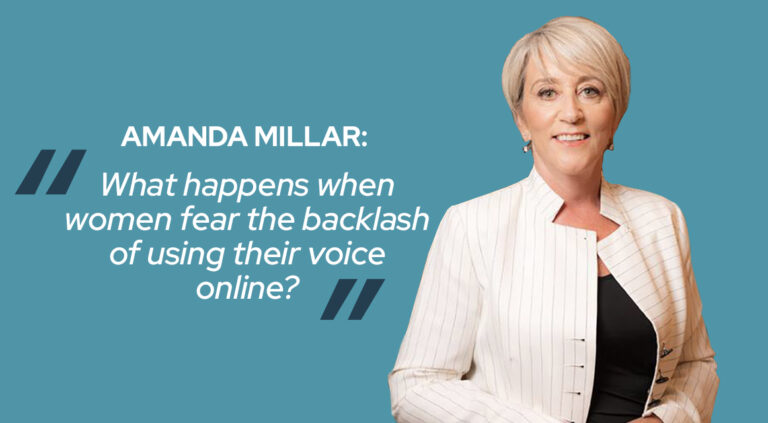
Noise and silence — the hate is gagging our women.

Amanda Millar is the founder of communications company amandamillar&co and has more than three decades

Amanda Millar is the founder of communications company amandamillar&co and has more than three decades of experience as a current affairs TV journalist. Here she gives her perspective on what happens when women, particularly those in leadership, fear the backlash of using their voice online.

Meet *Ngaire. Ngaire is a participant in one of our leadership training programmes. She’s a leader who desperately wants to go further, who knows she has a lot to offer, but also knows she has to ‘put herself out there.’

Ngaire has the qualifications, insights, and creative solutions to a high-profile social crisis. But she won’t step out or up. Why? Because, she says, “Why would I risk alienation, scrutiny, abuse and my well-being when I’ve seen what happens to women leaders in Aotearoa?”

Our society faces a grim future if half of its population is silenced in this way.

Democracy is about voices… All voices

Democracy is about voices. But more than that, a decent society is about voices.

All voices.

Loud, soft, angry, passionate, strong, confused and courageous voices.

For politicians and leaders to represent us, they need to reflect us. All of us. But the relationship between politics, leadership and women is fraught.

Studies and recent events show at worst, the relationship is dangerous.

At best, in the words of Facebook’s relationship status options, ‘it’s complicated’. It shouldn’t be, but it is.

“Misogyny is not about male hostility or hatred toward women. It’s about controlling and punishing women who challenge male dominance.”

University of Auckland research found former Prime Minister Jacinda Ardern was the target of online vitriol up to 90 times more than any other high-profile figure.

We’re up against that word, misogyny. Cornell philosophy professor Kate Manne argues that misogyny is not about male hostility or hatred toward women. It’s about controlling and punishing women who challenge male dominance. Essentially, they don’t like us because we’re being women in a man’s world.

They make money from the vile words created by cowardly fingers and faceless mouths.

Social media and online platforms are fuelling the problem. There’s little motivation for them to blanket those flames of hate when they make money from the vile words created by cowardly fingers and faceless mouths.

Sensational content creates clicks, shares and comments. That’s engagement. That’s how digital platforms make money. This means sexism, misogyny, racism, hate, misery and disinformation are profitable for online platforms. That’s sickening, and we shouldn’t accept it.

“Harmful narratives are boosted and amplified through algorithms that make such content sticky and often viral”

Lucina Di Meco co-created #ShePersisted to raise the voices of global women leaders. She explains, “The design of the major digital platforms is largely responsible for the hellscape currently experienced by women online. Harmful narratives are boosted and amplified through algorithms that make such content sticky and often viral, through recommender systems built to maximise attention, and features that facilitate its rapid and widespread distribution.”

It goes further than our female politicians. It affects all of us as leaders and as women.

Here in New Zealand, mainstream media for the most part, have grown up. Ten years ago, it was all about getting ‘eyeballs on screens’. Since then our mainstream outlets have become the ‘mature older sibling’ that recognises it’s not cool to engage in clickbait.

Sadly, the social media platforms, especially the more alternative platforms such as Telegram, Gab and video channel Rumble, publish vile disinformation and misinformation unchecked. The more mainstream platforms, such as Facebook and Twitter, still have major work to do too.

They’re winning. Hate and fear are silencing women.

Amnesty International research found in New Zealand around a third of women surveyed had experienced online abuse and harassment. Of those women, half said they used social media less or stopped altogether.

So where are their voices? This abuse has made it unsafe for these women to speak out online.That makes me angry. They are entitled to their opinions, to voice their beliefs and to feel safe to do so.

I’m driven to help all women strengthen their presence, their status and their voice. I want to encourage them to play big — to be fearless enough to take risks and to take the lead.

Tara Mohr, author and founder of the global Playing Big women’s leadership programme, says it’s important for women to stop thinking of criticism as a signal of a problem and to start seeing it as ‘part and parcel of doing important work’.

But what happens when criticism becomes hostile and deeply personal? We’re seeing more and more courageous female leaders, locally and internationally, being targeted with hate and gendered disinformation.

Make the abuse stop

This abuse has to stop. Tech companies have been called upon to make real changes, and here in New Zealand we have a specific law which covers sexist, racist and other harmful communication.

There are a range of suggested ways to combat abuse and harassment.

There’s the passive: “Ignore it, they’ll soon tire” like the well-meant advice on dealing with schoolyard bullies.

There’s the practical: Block, mute, report.

There’s also the pre-emptive: Google yourself. Think like a troll — what information is out there that they can exploit? Your address, connections to your friends, your family?

Why is it up to women?

Why do we women have to change our behaviour, mute our ideas, or temper our opinions? Why should we feel intimidated or reluctant to use our voices?

It’s because we’re paralysed by what the comments and consequences are likely to be. A study of women in 51 countries by the Economist found 1 in 3 women think twice about posting online.

It reminds me of the draconian lessons girls and women are taught to keep themselves ‘safe’ on a night out. ‘Don’t drink too much’, ‘stay in a group’, and the patronising, ‘don’t wear anything too revealing’.

It’s the perpetrators who need to be taught to NOT rape, assault or abuse.

The rape reference is uncomfortable but relevant. Many women who speak up or have a media profile are threatened with rape. A threat that doesn’t go away when you log off.

Courageous voices are retreating

One such Kiwi female reporter is former 60 Minutes colleague and now Stuff Circuit investigative journalist, Paula Penfold. She’s subjected to abuse almost daily but this escalated alarmingly when she released her award-winning documentary Fire & Fury. Suddenly the hatred, abuse and death threats exploded like a festering, toxic boil. As a result, her life and her freedom have been severely impacted.

Paula’s response: “It’s forced me to retreat. My voice has been limited and restricted as I’ve had to shutdown my online channels to minimise the attacks. I can’t freely express my opinions anymore. It makes me angry and frustrated that they win.”

Reporting the rape and death threats to police is futile. Nothing can be done, Paula says. Nobody can be held to account.

Her wish is for better laws but, in the meantime, solidarity in networks where other women are speaking up gives Paula a glimmer of hope.

How do we stop this brakeless bus?

If I could reach through the fibre (speaking both technologically and metaphorically) of those who write, share and ‘like’ this vile, toxic content, I’d ask them, “What are you afraid of?”

By all means, post your opinions on a subject. Engage in conversation around those ideas. But have enough confidence in your ability to defend the strength of those ideas that you don’t resort to personal and hostile attacks.

If you find yourself tempted to target the women you disagree with rather than the ideas, take a moment. Don’t post it. Don’t say it. Don’t share it. You need to be silent. The voices I want to hear are those that your attacks threaten to silence.

* Name changed


Global Women warmly thanks Member Amanda Millar, for sharing her voice, expertise and platform in exploring and speaking out about this important issue. 

Aotearoa New Zealand’s Turning Point

How does the Treaty of Waitangi, managing emissions and embracing equity work together to create

How does the Treaty of Waitangi, managing emissions and embracing equity work together to create a prosperous Aotearoa? 

A new report by Global Women Partners, Deloitte, outlines the targeted actions we can take to transition to a decarbonised economy — and reap its benefits. 

That is, if we act on it. 

Titled Aotearoa New Zealand’s Turning Point, the report — with substantial input from leaders  Jane Fraser-Jones and Liza van der Merwe — considers how our nation’s unique intersection of laws positions us to not just decarbonise our environment, but reap a bountiful harvest from it. 

“It was interesting to learn New Zealand will be the first country in the world to reach its turning point” — Liza van der Merwe

It uses a unique economic model to show that adequate climate action could add 64 billion to New Zealand’s GDP, in net present value terms, by 2050 if warming is limited to 1.5°C. A loss of 4.4 billion is the other side of the coin, should inadequate action not be taken. 

Like most things worth fighting for, it gets tough before it gets better. If New Zealand stays on track, it will be one of the first countries to reap the benefits. After 2036, New Zealand’s economy will not only grow, but grow more than it might otherwise from inadequate action on climate change.

“…We have a comparative advantage to the rest of the world and can have a first-mover advantage by taking action now” — Liza van der Merwe

“It was interesting to learn New Zealand will be the first country in the world to reach its turning point,” shares Liza van der Merwe. “Part of the reason New Zealand will reach this point relatively early compared to other countries is due to the high proportion of renewable energy we already have. This means Aotearoa’s transition towards net-zero emissions, relative to other countries, is not as significant and costly. We, therefore, have a comparative advantage to the rest of the world and can have a first-mover advantage by taking action now,” she says when asked what found most interesting in this report.

“Without [business leaders], Turning Point wouldn’t have the richness it does, so it shows what an important issue this is for local businesses” — Jane Fraser-Jones

Researcher Jane Fraser-Jones also speaks to the power bringing together a range of perspectives in this dialogue. “We spoke to range of business leaders and all were really generous with their time, providing thoughtful and interesting answers and context. Without them, Turning Point wouldn’t have the richness it does, so it shows what an important issue this is for local businesses.”

For Jane, this is a huge source of pride for this research. “[I’m most proud of] the dedication from our team to contribute this great thinking to a topical, national conversation, and to the business leaders for taking the time to engage with us, which is hugely appreciated”.

As for what Liza is most proud of? “It’s great to be part of the creation of this initiative and our amazing team collaboration across 12-months, and I’m really proud to be contributing to the conversation on the impacts and opportunities of responding to climate change in New Zealand.” 

“As an economist it’s also been a great opportunity to develop modelling infrastructure to showcase how we reached our findings and how we can then apply this to clients organisations to help them take a strategic position on climate change action.”

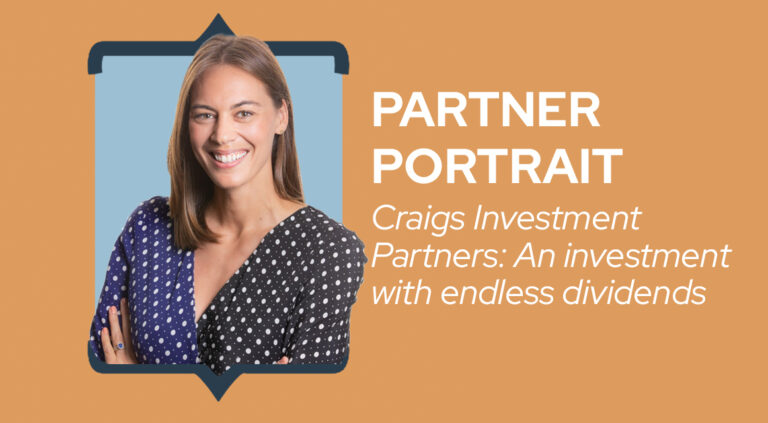
Craigs Investment Partners on becoming a Global Women Partner

  If there’s anyone who understands the importance of — quite literally — investing in


If there’s anyone who understands the importance of — quite literally — investing in the future, it’s Craigs Investment Partners

A long-term mindset, a commitment to consistent actions: the principles of investing for the growth of people and profits share some strong common ground.

Having recently joined as Global Women Partners, Craigs Investment Partners are dedicated not only to growing the wealth, but also the wider equity of New Zealanders with this very principle. To celebrate the move and CEO Simon Tong becoming a Champion for Change, Global Women joined in kōrero with Hannah Gillespie, Head of Strategy, to talk about keeping and strengthening this momentum. 

“We have gradually grown our network of female advisers across New Zealand, all passionate about empowering women with more knowledge and confidence to invest and to become successful investors, to ultimately provide financial freedom and peace of mind.”

Diversity and equity focuses are far from new for Craigs Investment Partners. Their gender lense saw them as one of the first firms to realise — and take action — on the investing gap among genders. Enter Women’s Wealth: regular sessions designed to equip women with the practical information needed for all kinds of investing matters.

You’ve held Women’s Wealth sessions for quite some time now: could you tell us where the inspiration was behind this?

“Women’s Wealth was started by a few female advisers in 2007 at a time when there weren’t many initiatives tailored specifically for women. Craigs’ Women’s Wealth aims to empower women with knowledge and confidence to invest.

“We know that women generally tend to invest or save less than men due to often taking time out to care for children or working with reduced hours. This coupled with the fact that women generally live longer than men means that when women are faced with life changing circumstances many feel unsure about what to do next or how to manage their finances. We have gradually grown our network of female advisers across New Zealand, all passionate about empowering women with more knowledge and confidence to invest and to become successful investors, to ultimately provide financial freedom and peace of mind.

“The feedback has been nothing short of positive: Women attending often come away with a sense of relief and empowerment. Many say they wonder why they haven’t joined sooner.”

“We’re proud of the continuous effort our advisers put into educating their clients and those new to investing to set more people up for financial success”

Craigs Investment Partners mission to focus on equity extends far beyond personal equipment and external activities. Shifting the dial internally is part of their outlook.

“We are really proud to partner with Global Women and we look forward to hearing from other businesses how they have approached D&I within their organisation.

“Craigs Investment Partners is at its heart, a people business. We are committed to our company values which promote a workplace where all employees are equal, feel a sense of belonging and valued in the role they play to deliver the best outcomes for our clients, shareholders and each other. We look forward to advocating for a workplace that is inclusive, diverse and where people feel like they belong.”

When asked about what Craigs are proud of to date, education and momentum comes to mind: 

“We’re proud of the continuous effort our advisers put into educating their clients and those new to investing to set more people up for financial success. We are really gaining momentum around our Women’s Wealth programme now with 50 female advisers involved nationwide running events centred around different topics.”

As for what diversity means to Hannah and the team at Craigs Investment Partners?

“As a firm we support the global research and thinking which shows that diverse companies are not only stronger — they also outperform industry peers on profitability, and they are more likely to adapt to, and withstand massive changes in circumstance.

“This thinking aligns with the strategic goals we have set as an investment firm and an employer and ultimately matches the diversity of our clients and New Zealand.”

Waitangi Day: Looking back and moving forward

It’s said that history never repeats. Through the power of reflection, we can both draw

It’s said that history never repeats. Through the power of reflection, we can both draw on the learnings of yesterday while keeping the trajectory, legacy and momentum going.

Waitangi Day is a day to commemorate, to remember, to celebrate the positive aspects since the signing of the Treaty of Waitangi.  While committing to our collective responsibility to forging a future that is diverse, equitable and inclusive.

This Waitangi Day, Global Women is launching a social campaign: marking key historical moments for women from 1840 through to 2023 and a look through to 2040 — the 200th Anniversary of the signing of the Treaty of Waitangi.  Juxtaposed with some of the incredible milestones we’ve already hit in Aotearoa, it’s a reminder of what can be achieved if we work together in a true treaty partnership.

The campaign is fertile ground leading up to the Global Women Annual Members Hui at Waitangi in May. The membership will come together to imagine and create a collective vision of the future for wāhine of Aotearoa in 2040.  It is our intention to draw from the collective vision to accelerate our progress towards a more diverse gender equitable Aotearoa New Zealand.

Global Women today, take their place alongside New Zealanders in marking Waitangi Day as an opportunity to look back, to move forward and be the change we want to see.

“Waiho i te toipoto, kaua i te toiroa”

Let us keep close together, not far apart

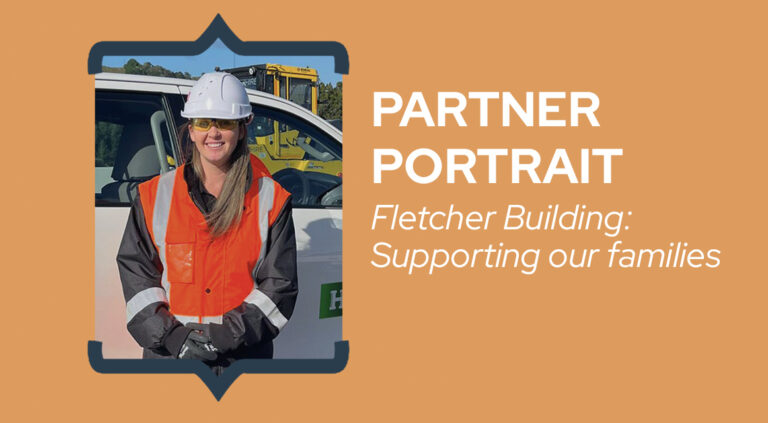
Inside Fletcher Building’s Future-focused Parental Leave Policy

Fletcher Building’s new Parental Leave Policy isn’t just a shake up of their existing status

Fletcher Building’s new Parental Leave Policy isn’t just a shake up of their existing status quo, it’s a shining example to other organisations. 

Having taken a deep dive into the needs and experiences of those in their team — both currently and formerly — Global Women Partner, Fletcher Building, have a new gender-neutral policy that is as comprehensive as it is effective. 

The policy encompasses more than just the leave itself, which offers 6 months full-paid leave to primary caregivers and four weeks paid leave for secondary caregivers while continuing with employer retirement contributions. Here, the phased return-to-work benefits are as considered as their leave: with staff being able to return to work part-time at 80% on full pay for six months, plus as receive 5 additional days of new parents leave for a year for primary and secondary carers during their first year back at work.

To talk about this shift, the process, and the effect it has had on the Fletcher Building team, Global Women joined in kōrero with Claire Carroll, Chief People Officer of Fletcher Building Limited. Here, she pulls back the curtains on her learnings, what she’s most proud of and shares some inspiring anecdotes of how it’s helped the team. 

What started as reforming a parental policy has planted a seed much greater than simply aiming for equity for parents: it’s led a ripple of other D&I and support-based improvement thinking across Fletcher Building.

“Our parental leave policy was quite an important way of showing our people how serious we are about [a very inclusive culture]” — Claire Carroll, Chief People Officer, Fletcher Building Limited

What principles/north star guided you and the team when creating this policy? (Or what sparked the change?)

It was guided by our people — we knew that this was something they were looking for. It was really quite an important part of walking the talk on our diversity and inclusion strategy. So we really are aiming to foster a very inclusive culture and to also improve our gender balance. 

Our parental leave policy was quite an important way of showing our people how serious we are about that. And I think they then became our guiding star, because we really spent a lot of time talking to them about what was most important in a parental leave policy for them. That was really helpful because it meant we could design it in a way that was really going to fulfil what was most important for them. They then felt really heard and very much a part of it. 

[The collaborative approach] means that we could bust any myths we had or set aside some of our old fashioned ways of thinking about things. This really came through with the language that we were using around it: it’s a very gender neutral policy, and orientated to modern families and things like that. And that was really important for our people, as well as the benefits that we were providing.”

“As we were getting feedback, one of our men said his wife was able to take up a promotion at work — she doesn’t work for Fletcher Building. That feels like impact on our community” 

Did any interesting/surprising learnings emerge in this process?

Probably not so surprising, but just the degree of impact and the feedback from our people saying it’s just totally changed the conversation at home [among] those of our people who are about to have a baby. They were saying how conversations at home had been all around financials and what they were going to do to be able to afford it — and now these first months are so much better, because it’s all just gone and they’re just thinking about welcoming this new member of our family. That was really nice, because you really felt like we’ve taken pressure out of the system.

The other part was transitioning back to work. We really want our people coming back after parental leave. What they were telling us is, is that first six months to a year afterwards can really make the difference. So that’s why for the first six months from returning, your work load is set at 80% but you’re paid for full time. There’s also the Additional Carers’ Leave: five days for those appointments that pop up or sickness. It’s just about creating that buffer so that it wasn’t eating into annual leave and sick leave. 

As we were getting feedback, one of our men said his wife was able to take up a promotion at work — she doesn’t work for Fletcher Building. The fact that he is staying home meant that she has taken her promotion and is going back to work — that feels like impact on our community. I was really thrilled to hear that because we can’t sort of have more women progressing in the workforce if men aren’t stepping in as well. So that was a really nice and very tangible example.

“One of the things we did to prevent a challenge was being very transparent about the assumptions we made around the financial cost to the company.”


Were there any challenges or unexpected happenings along the way?

We put a huge amount of work in upfront. The HR team quietly in the background really does a lot of work, so by the time we got to the executive, it was really well supported. 

One of the things we did to prevent a challenge was being very transparent about the assumptions we made around the financial cost to the company. It’s hard: how do you really know how many women and men are going to take it up? After all, we want them to — that’s why we’re putting [it] in place. 

I think one of the ways that we got over that was, we made some assumptions based on the New Zealand and Australia demographics (it’s a trans-Tasman policy) and how many people actually take parental leave as primary and secondary caregivers. 

That was reassuring for decision makers, and I have to say, the senior leadership of the company has been extremely supportive. I give a lot of credit to my team for that, because, it’s like anything: you put the work in upfront and it goes smoothly.

“The key thing… has just been how freeing it is [for staff] to be able to just focus on your family.”

What’s the feedback been like, overall?

There’s been really lovely feedback. I think the key thing around it has just been how freeing it is [for staff] to be able to just focus on your family and getting excited and not having that sort of pressure and stress on your mind. There’s definitely a theme around our people feeling really valued [and] protected. We really haven’t had that sort of cynicism that you can get.

Particularly, I’ve been pleased that those of our people who have long past had a family — their children have grown up, they have grandchildren, and those who probably never would think about having a family — they’re really pleased that we’re doing it.

“It’s created a really nice conversation internally. I feel like it’s symbolically a really important step forward for us as a company for the diversity and inclusion, but actually just more broadly caring about our people.”

We haven’t actually used any sort of traditional language: it’s been why we went down the “primary secondary career” route, and didn’t create assumptions around who that is most likely to be or not be. And I think [it’s been positive for] the dads as well. I think, because mums and dads as the secondary carer often appease. So for the mothers who would prefer to be secondary carers, the fact that there is still leave there for them [in this policy] is important. 

I think how responsive the organisation has been through all levels, I think it shows how much we’ve grown as a company.

So I think those would be the key themes, and it’s created a really nice conversation internally. Symbolically a really important step forward for us as a company for diversity and inclusion — but actually just more broadly caring about our people. 

“We haven’t actually used any sort of traditional language”

What advice would you give others looking to implement a similar policy?

I think my learning was the value of really talking to our people. I think that was really helpful, because when you’re selling to your senior team, you’re able to really bring an emotion to the table as well. 

On the balance, being transparent and realistic about the assumed cost — because I think by us being very clear about it, it meant that there wasn’t any oxygen taken out in debating that. It allowed us to focus on realistic assumptions and figuring out what we want, as opposed to anguishing through weeks of “have we assumed the right cost?!”  

But I think primarily it was getting out to our people and bringing them into the room when we were talking and just what an impact that had made. Ross has been getting lovely emails from our people, and that’s been really nice, because then he gets a sense that it is having the impact that he and I wanted it to have. 

“When the feedback was coming back [from employees], we knew who we’d asked and why we’d asked them.”

As for the routes and pipelines through which Fletcher Building engaged their staff through… 

It was a mix: we did some focus groups, we did a survey, and we surveyed people who had left the organisation. We also used our employee action group and equality network.

We segmented the sorts of people we wanted to get feedback from: people who had taken parental leave and returned, had not returned, people who were thinking of taking parental leave and those who were not even thinking about it yet. So when the feedback was coming back, we knew who we’d asked and why we’d asked them — so that was helpful.

It helped us get a balance, particularly on things like the transitioning back to work and the extra leave and the retirement, making sure that the retirement savings continued. It also helped us tailor our communications on the way back round. It was kind of: ‘This is what you said you’re after, and this is how we’ve addressed it.’

For Claire, this isn’t simply a win for Fletcher Building, but rather anyone committed to shifting the dial: 

I think it helps other HR teams, because they go, ‘oh, okay, so this is what they did,’ and it gives them a bit of oxygen for their arguments as they’re going to argue for these sorts of policies. I think it helps when you can point to other organisations.


It’s also been a crucial stepping stone in opening the aperture to other diversity matters: 

We [in October] announced our gender affirmation, leave and transitioning guidelines. It’s really nice to be able to show our community that we’re thinking of them. These things build on each other and people: it’s building up really good trust that we’re doing what we say we will.