News & Media

Gender pay gap reduces when salary information is publicly available

There’s a brand new piece of research dedicated to showing the power of salary transparency.

There’s a brand new piece of research dedicated to showing the power of salary transparency.

Pay transparency has been the subject of a number of conversations in the Global Women universe — among our Champions for Change, our Members, our wider orbital communities — so it’s no surprise that we’re interested in hearing the exact outcomes it can have for women.

Spoiler alert: it’s looking positive for women’s pay equity. 

In this study, researchers at University of California San Diego’s School of Global Policy and Strategy looked at how universities in Ontario, Canada fared after publicly releasing the salaries of those who made over $100,000. This comes after a policy implemented in the 90s made it a requirement for organisations to report for this income level.

“…The data did not reveal changes at the individual level” — Laurina Zhang, School of Global Policy and Strategy, University of California San Diego.

The research found that those who made pay information publicly available during the 24 years  increased pay for women employees by roughly 4%. As for the universities that kept it behind closed doors? They did not increase their pay for women employees.  

This study also debunked some popular ideas around how pay transparency stirs up change. It didn’t so much a baseline number that women can use as leverage to negotiate a higher pay. Instead, it revealed how doing so sets  an organisational tone. 

“We expected that salary transparency would reduce inequality because females were going to see what their male counterparts were making and try to negotiate for more equal pay, but the data did not reveal changes at the individual level,” Laurina Zhang, co-author of the study, said. 

“Universities most likely to anticipate higher scrutiny… responded more aggressively and quickly to improve gender pay equality” — Elizabeth Lyons, School of Global Policy and Strategy, University of California San Diego.

“We find that when there is a standardisation process that makes searching for compensation information very easy, then organisations as a whole have an incentive to improve equality to reduce the threat of public scrutiny,” shares Elizabeth Lyons, Associate Professor of Management at the School of Global Policy and Strategy.

Interestingly, she shared that status had a part to play for some institutions. “Universities most likely to anticipate higher scrutiny, such as top ranked institutions, responded more aggressively and quickly to improve gender pay equality by slowing the growth of male salaries as well as by increasing female pay.” It’s a good reminder of the power of privilege – even as an organisation — and leading by example.  

For more information on this study, read more on UC San Diego’s site or access the full paper: Salary transparency and gender pay inequality: Evidence from Canadian universities here

Is it time Āotearoa embraced a parental leave registry?

It’s no secret that we believe that transparency is a key driver of change. From

It’s no secret that we believe that transparency is a key driver of change. 

From advocating for pay gap reporting with our Champions for Change, masterclasses on the matter, to holding space for the power of salary transparency and banding, we’ve had many a kōrero on the power this level of accountability has in advancing equity. 

Recent moves in Aotearoa show that transparency through reporting is gathering steam: Mind The Gap’s Pay Gap registry, launched this year, being one such example. 

So, is it time to apply this lense to other matters of equity?

In kōrero with Stephanie Pow of Crayon, the answer is a clear yes. It’s time for paid parental leave policies to be sung from the rooftops — while being put under a spotlight. 

Enter Crayon: Crayon is building the most comprehensive database of parental leave policies in New Zealand. The register will be a public and living resource for employees, HR teams, employers and thousands of passionate Kiwis who seek better support for working parents — plus the better productivity outcomes for the nation as a whole.

We talk to founder Stephanie on exactly what Crayon has in store for New Zealand, how we can help the cause gain momentum — as well as hear a personal note on what inspired Stephanie to bring Crayon to life. 

Can you tell us more on what inspired you to start Crayon?

Three years ago, I welcomed my first child. Even though I had an MBA from the top finance school in the world and had worked in the industry since I was 18, I got a rude financial shock. Like many new parents, I realised you face a whole set of money-related challenges that traditional finance does not prepare you for.

If two parents, each earning the NZ median income of $56,000 per annum, take their full parental leave entitlement (52 weeks for the primary carer and 2 weeks for the partner) and receive the government parental leave payments, their household is $42,600 worse off that year pre-tax. As a result, 70% of women return to work before they want to, largely due to financial constraints (source). At the same time your income falls, your expenses shoot up. Baby-related costs on a medium-spend budget are $15,834 in the first year, based on 2018 figures (source).

Few areas of our lives are unaffected by financial stress, but the additional weight of being responsible for another raises the stakes. The reality is that money can influence many key parenting decisions, from the types of future opportunities a child has to the stability of the environment they grow up in. It comes as no surprise that finances routinely rank as the #1 concern for families.

Parenting is hard enough – I figured there had to be a way to take some of the financial stress out of it and that’s why I started Crayon.

How does Crayon benefit NZ as a whole?

We’re on a mission to reduce financial stress for parents.

First, as I discovered first-hand, it’s hard to feel like a successful parent when money concerns weigh on you. A growing body of research shows that parents who experience financial stress are more likely to experience parenting difficulties. Most of us are trying our best, and our philosophy at Crayon is to help you make smart money moves so you can be the parent you want to be.

“It’s hard to be a great employee when you’re financially stressed. In addition to the burden the employee wears, the employer also faces costs.”

Second, it’s hard to be a great employee when you’re financially stressed. In addition to the burden the employee wears, the employer also faces costs. Financially stressed employees lose 358 hours of productive work, take four extra sick days per year (source) and are twice as likely to look for a new job (source). The more Crayon can guide parents through this financially challenging chapter of their lives, the more they’ll be able to contribute to their workplace.

Our ultimate goal is to make financial decisions simpler and more intuitive for parents by creating financial roadmaps for every stage of parenthood. To begin with, we’re focusing on expecting parenthood because that’s where the rubber hits the road, financially. We’re helping parents navigate this chapter of their lives by building The New Zealand Parental Leave Register, launching a baby prep course (like antenatal class for your money) and offering free tools and resources on our website.

What has the response to Crayon been like so far? 

The most common sentiment we hear is, “I wish Crayon had been around when I had my child!” It’s good to know we’re solving a real pain point for people. There are so many unknowns that come with parenthood, and it can really shake your confidence. The more we can demystify the financial ones, the more ready new parents will be to navigate this next chapter of their lives.

“Our overarching principle is to work constructively with employers to build a verified database. We’re not here to rank or rate employers based on their parental leave policy.”

What would be your advice to employers sitting on the fence to joining the register?

Our overarching principle is to work constructively with employers to build a verified database. We’re not here to rank or rate employers based on their parental leave policy.

Our goal is to make the information publicly available so Kiwis can make informed choices. In New Zealand, an employee has to be at the employer for 12 months before they’re eligible for full parental leave entitlements from the government, so it’s really important that prospective and current employees have access to this information.

We celebrate the employers who have a government standard policy and choose to join the register as much as the employers with market-leading policies because they’re all committed to transparency.

“There’s nothing better than reading notes from parents and parents-to-be that they’ve turned a corner in their financial journey or they feel really confident and relaxed going into parenthood.”

What are you most proud of, to date with Crayon?

We’re a small but mighty team, and we’re honoured to work with people through an exciting, personal and often overwhelming period of their lives. I’m proud that we’re able to provide tools and resources that genuinely help people make good decisions.

There’s nothing better than reading notes from parents and parents-to-be that they’ve turned a corner in their financial journey or they feel really confident and relaxed going into parenthood.

What are your hopes for all working parents?

My hope is that all parents can feel financially confident so that they can worry less about money and focus more on the people and passions most important to them.

With respect to the register specifically, my hope is that it becomes common practice and expected of employers to disclose their policy. Until that time, we want to provide the most comprehensive, up-to-date database we can and for as many employers to sign up as soon as possible.

Champions for Change — working together to achieve inclusive prosperity for Aotearoa

In the final Champions for Change Summit for 2022, a panel comprising Jolie Hodson, Spark

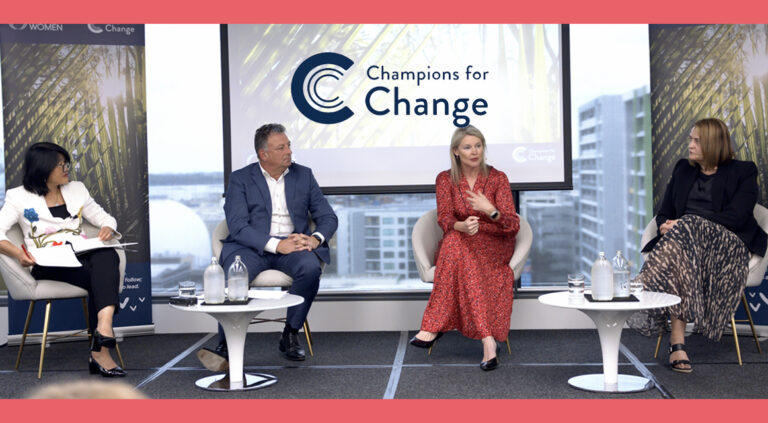
In the final Champions for Change Summit for 2022, a panel comprising Jolie Hodson, Spark CEO, Vittoria Shortt, ASB CEO, and Mark Averill, CEO PwC, gathered to discuss the role of business in leading an inclusive and prosperous future for Aotearoa New Zealand.

Given our evolving and uncertain environment, businesses are playing an increasing role in driving inclusive prosperity for all New Zealanders. Three key themes emerged in this vibrant kōrero:

  • Businesses coming together collectively and working with government
  • The importance of a clear purpose within your business strategy for impactful change
  • Workplace wellbeing and belonging being a key focus area

Expertly moderated by honorary Champion for Change Mai Chen, Managing Partner of Chen Palmer and one of New Zealand’s top barristers in Public Law, it became apparent that even the meaning of inclusive prosperity in the current world had changed.

“There is an increasing expectation on businesses to play a bigger role and we can’t just focus on shareholder value…” — Mai Chen, Global Women Member and Managing Partner of Chen Palmer.

“We continue to operate in rapid uncertain change, and the bar is higher with another surge of Covid-19 upon us, accelerated climate change, record employment, record inflation and asset devaluation.

“There is an increasing expectation on businesses to play a bigger role and we can’t just focus on shareholder value but the broader perspective around values and expectations – our people, our customers and our role in communities as well,” she said.

Panellists agreed that the business community should be working together, both private enterprise and the public sector so we can address issues collectively.

From left to right: moderator Mai Chen with panellists Mark Averill, Vittoria Shortt and Jolie Hodson.

Jolie Hodson believes it is indeed “our purpose” which helps you make choices within your strategy and how you show up as a business.

“Our purpose is what guides us because it is our purpose which gives meaning of the role that we all play, not just for our people but in society. In Spark’s case, it is around helping all of New Zealand win big in a digital world. That’s not just about the people we serve in our industry, but also about the communities we serve as well, and the governments we work with.

“Digital exclusion is an issue in New Zealand with one in five people not having the ability to connect. When looking at how we enable people to do that, it’s not just about access but about skills and about future workforce,” she said.

“Previously we have thought about inclusive prosperity through the productivity and economic growth lens, however in today’s world the social aspect has become increasingly important,” said Mark Averill.

“When we think about the environment, the pace of change is increasing massively and when we look forward, it is only going to continue and get faster. There are the mega trends; the big global environmental shifts changing the world such as climate change. The demographic shifts, and the fractious world we are living in, with war being a part of it.

Then there are the technological advances and the social instability piece. All catalysing rapid change. We are also tackling the short-term issues of inflation and the response to Covid, so as leaders we are having to do a bit of triage,” he said.

“Covid-19 has given us the gift of thinking more about inclusion and holistic wellbeing” — Vittoria Shortt, Global Women Member and Chief Executive of ASB Bank.

It is clear New Zealand business leaders are having to be agile and adaptable, with the focus on getting business strategies right to manage both longer-term and shorter-term issues, with the goal of investing in the things that help New Zealand move forward.

“Covid-19 has given us the gift of thinking more about inclusion and holistic wellbeing. As an organisation we looking at social fusion by tapping into belonging and harnessing the things that make people unique and special,” Vittoria Shortt said.

What is clear from this summit on inclusive prosperity is that Champions for Change are taking more and more of a leadership role in New Zealand Inc and using their expertise to help solve problems far beyond their own back yards. With inclusion, comes prosperity.

Dame Patsy Reddy elected as New Zealand Rugby chair

It’s with great pride that we share that one of our members has made history

It’s with great pride that we share that one of our members has made history for women’s sport: Dame Patsy Reddy has been elected as the first woman chair of New Zealand Rugby.

Not only that, fellow Global Women Member and Current NZ Rugby directors Professor Dr Farah Palmer (Waikato, Ngāti Maniapoto) will become Dame Patsy’s joint deputy chair, along with Bailey Mackey (Ngāti Porou, Tūhoe, Rongowhakaata).

“It is an absolute honour to be elected to the position of chair at such a pivotal and exciting moment for rugby in Aotearoa,” Dame Patsy shares with Stuff.co.nz. 

The election took place on the final board meeting for 2022, and Dame Patsy will take the reins on January 31. 

This comes after Dame Patsy’s appointment to the New Zealand Rugby Board in May earlier this year, where she reflected on the power of gender diversity: I’ll be conscious of the fact I’ll be there to listen and learn for a bit. I’m delighted there will be three female board members but it’s three out of nine. Diversity comes in many forms, gender is just one, so I guess there’s quite a way to go.”

Considering the great triumphs achieved in the sporting arena in 2022 — with the Black Ferns’ success and spotlighting of women’s sporting excellence coming to mind — it’s safe to say that Dame Patsy is joining at an exciting and pivotal time. We cannot wait to see what this move has in store for all wāhine in the rugby and sporting world, and of course, our member Dame Patsy Reddy. 

Riana Manuel: the gap between Māori and non-Māori life expectancy should be falling within five years

A seven-year gap between Māori and non-Māori life expectancy should be falling within five years,

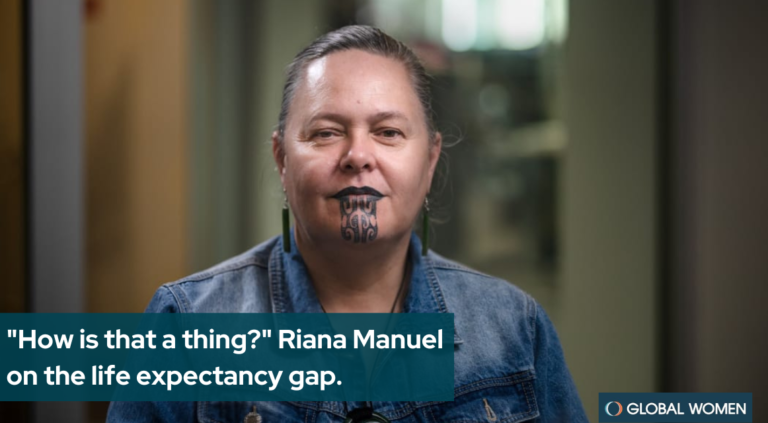
A seven-year gap between Māori and non-Māori life expectancy should be falling within five years, shares Global Women Member and chief executive of the Māori Health Authority, Riana Manuel.

Drawing on her vast experience as a health sector champion — recently appointment to Te Aka Whai in July — Riana Manuel lends her voice to RNZ’s newly-launched investigation on the life expectancy gap between Māori and non-Māori.

Currently, there’s a 7-year gap in the life expectancy between Māori and non-Māori people. Riana shares that, in order to change this, measures must directly address the racial element. Moreover, Riana reassures that there shouldn’t be fear in addressing them head on.

“You have to be really determined to look at the people who have this less life expectancy and decide to put initiatives in place without being afraid of what that’s saying” — Riana Manuel, chief executive of the Māori Health Authority.

“You have to be really determined to look at the people who have this less life expectancy and decide to put initiatives in place without being afraid of what that’s saying,” she shares with RNZ’s Ella Stewart.

Ideas around health targets — and the debates around their efficacy — are boldly reflected on by Riana: “I’m really happy to go on record and say that, simply because if you set a target, you have to be able to address that when you don’t reach the target what does it actually mean?” New targets are due to be outlined in early 2023 for both Te Whatu Ora and Te Aka Whai ora.

This, plus thoughts around what holistic health targets, deep-dives into inequalities and the compounding effect of healthcare disparities are also explored by Riana in this thought-provoking interview.

Discover and watch more of RNZ’s Ella Stewart’s full interview with Riana as the first think-piece in the series, which starts today.

We’re ‘downing tools’ to raise awareness of gender pay gap this #NoPayDay

  Today, on Monday 28th November, we’re calling on the community to join us in


Today, on Monday 28th November, we’re calling on the community to join us in ‘downing tools’ and put on their out of office, to raise awareness of the gender pay gap. We invite you to be part of the movement.

The gender pay gap sits at 9.2% for women in Aotearoa currently. We urgently need your help in shifting this dial.

For our second year in a row, we’re calling on our whānau to raise awareness on the last working day for women, Monday 28th November — and invite you to spread the word to your organisations, workplaces, communities and whānau by including the below message as an out of office message today and for the rest of the week if you wish.

We want to use this day to encourage individuals and organisations to have an open conversation about the inequalities that drive ethnic and gender pay gaps. It is only when we have conversations about the gaps and why they exist that we will be able to take steps to close them.


Support #NoPayDay in your out of office message

We encourage those aligned with our message to set their out of office message on Monday 28 November and include the following copy:

I am out of office until 1 January 2023.

That got your attention – didn’t it? I am not, but for some women, they may as well be.

On average New Zealand women are paid 9.2 % less than our male counterparts – and with 9.2% of the year left, this effectively means that from today onwards, the average Kiwi woman is working for free. 

This inequality is even worse for Māori and Pasifika women, who began “working for free” from November 4th. 

We urgently need to close the gender pay gap and bring pay equity and transparency to the fore in New Zealand. Please join us by sharing this message in your out of office today in order to help us raise awareness of the need for pay equity and pay transparency in Āotearoa New Zealand.

You can find out more about the equity initiatives Global Women is driving such as Champions for Change and programmes we are supporting including Mind the Gap and the Pay Secrecy campaign on https://championsforchange.org.nz/uncategorised/nopayday-2022/

#NoPayDay

A snapshot of the current Gender Pay gap in Aotearoa

Our 9.2% gender pay gap means that for every 365 days the average Kiwi man is paid for, the average Kiwi woman is only paid for 331. Monday 28th of November is the 332nd day of the year — so this effectively it is the day that the average kiwi woman is working for free.

This inequality is even worse for women of colour with the pay gap between all men and wāhine Māori, and between all men and Pasifika women sitting substantially higher at 15.7%. This equates to both groups of women having begun “working for free” from November 4th.


This #NoPayDay Global Women wants to encourage organisations and individuals to:

1. Report and monitor their organisations pay gap: Unless organisations are aware of their current pay parity status – when it comes to both gender and ethnicity – they can’t fully understand the changes that need to be made. Organisations need to make a commitment to scrutinise and monitor any existing pay gaps and then make a plan to correct them.

2. Be transparent from day one: If salaries are kept secret this will often result with people being remunerated different amounts for the same job, in turn stifling social mobility and fuelling systemic inequalities. A progressive step to take here is to state a salary when recruiting. By advertising a role with a clear salary band this helps break the cycle on both gender and ethnic pay gaps – it will also stop you inheriting a pay gap from a candidate’s previous employer.

3. Join our movement and set your out of office: To drive conversation on the day we will be encouraging our members and networks to mark the day by setting their out of office message in line with our campaign.

Three steps to help shift the dial on #NoPayDay

Today we are calling on the community to ‘down tools’ and put on their out

Today we are calling on the community to ‘down tools’ and put on their out of office, to raise awareness of the gender pay gap that remains at 9.2% for women in Aotearoa.

“This #NoPayDay we encourage organisations and individuals to focus on a couple of key contributing factors behind the pay gaps and take steps to mitigate them”  — Theresa Gattung, Global Women Chair.

We’ve had many questions on how people from all walks of life, organisations and industries can help shift this dial. We’ve created three key steps to help you join the movement.

We want to use this day to encourage individuals and organisations to have an open conversation about the inequalities that drive ethnic and gender pay gaps. It is only when we have conversations about the gaps and why they exist that we will be able to take steps to close them.


This #NoPayDay we want to encourage organisations and individuals to take action:

  • Join our movement and set your out of office: To drive conversation on the day we will be encouraging our members and networks to mark the day by setting their out of office message in line with our campaign.


  • Asking your employer about their current pay gaps and their plan around correcting this. Express to your employer that this is an issue you are passionate about and that they should be too.


  • If your employer isn’t listing their salaries with job ads, encourage them to and explain why. By advertising a role with a clear salary band this helps break the cycle on both gender and ethnic pay gaps – it will also stop you inheriting a pay gap from a candidate’s previous employer.


  • Report and monitor their organisations pay gap: Unless organisations are aware of their current pay parity status – when it comes to both gender and ethnicity – they can’t fully understand the changes that need to be made. Organisations need to make a commitment to scrutinise and monitor any existing pay gaps and then make a plan to correct them.


  • Be transparent from day one: If salaries are kept secret this will often result with people being remunerated different amounts for the same job, in turn stifling social mobility and fueling systemic inequalities. A progressive step to take here is to state a salary when recruiting. By advertising a role with a clear salary band this helps break the cycle on both gender and ethnic pay gaps – it will also stop you inheriting a pay gap from a candidate’s previous employer.

The Champions for Change Pulse-Check

Prosperity and our sense of Nationhood Te Tiriti o Waitangi lighting the pathway forward  

Prosperity and our sense of Nationhood

Te Tiriti o Waitangi lighting the pathway forward


With the demographic and social sands of Āotearoa shifting, Champions for Change have a real opportunity to influence the sense of nationhood within our country.

More than 50 Champion CEOs and Chairs gathered in person on Tuesday 30 August to connect and engage for the first time in two years due to Covid-19 restrictions.

Following a moving pōwhiri in the KPMG lobby, roundtable discussions began around how Champion organisations can embrace Te Tiriti o Waitangi to foster prosperity and a sense of nationhood within Āotearoa.

The August Summit built on the Champions for Change workstream ‘Increasing Māori and Ethnic diversity’ and was designed to provoke new thinking and generate action around how as organisations and leaders, Champions can acknowledge and commit to Te Tiriti o Waitangi.

Āotearoa’s first national acknowledgement of Matariki in June this year served as another important marker in the growing influence and integration of Te Aō Māori in our national identity. Champion organisations will create new value by committing to Te Tiriti o Waitangi which will lead to increased innovation and productivity for businesses and Āotearoa’s economy as a whole.

Champions gathered for a lively debate and discussion around:

‘What is the role of Champions for Change in leading the next phase of Āotearoa New Zealand’s sense of nationhood and how might we embrace the spirit and principles of Te Tiriti o Waitangi into our organisations’.

An influential panel gave Champions a unique perspective on the topic. The panel, moderated by broadcaster Peata Melbourne comprised Riria Te Kanawa, Partner and Director Māori Business KPMG, Traci Houpapa, NZOM Director and Strategic Advisor, Ziena Jalil, Director Education New Zealand, EQC, Asia NZ Foundation and Economist Shamubeel Eaqub.

Insightful views were shared around the role of the private sector in using Te Tiriti as the guiding light to shape our ecoomy for the better. Panellists shared views around what our nationhood looks like today and how and why inequalities are created, as well as how we can lay the foundations to close the power gaps and influence policy.

Māori leaders joined roundtable discussions to provide their perspective and wisdom with Champions reflecting on what is holding them back from embracing te tiriti principles into their organisations, how they can accelerate the process and who to partner with for long-term success.

“The Summit created great enthusiasm and energy to embrace this kaupapa of acknowledging and committing to Te Tiriti o Waitangi, taking it forward both within Champion organisations and as a Champions for Change collective,” Global Woman CEO Agnes Naera said.

This session complements our workstream dedicated to Māori inclusion with a focus on reducing and eliminating participation, power and pay gaps over time for Māori across the Aotearoa workforce.

Māori are a young population and will make up a much larger share of the working age population in the future. Rangatahi will be the backbone of the future of Āotearoa, and we will all benefit from supporting them to be the leaders we know they are”, she said.

We’re ‘downing tools’ to raise awareness of gender pay gap this #NoPayDay

  On Monday 28th November, we’re calling on our members and community to ‘downing tools’


On Monday 28th November, we’re calling on our members and community to ‘downing tools’ and put on their out of office, to raise awareness of the gender pay gap.

Currently, the gender pay gap remains at 9.2% for women in Aotearoa. We urgently need your help in shifting this dial.

For our second year in a row, we’re calling on our whānau to raise awareness on the last working day for women, Monday 28th November — and invite you to spread the word to your organisations, workplaces, communities and whānau.

Our 9.2% gender pay gap means that for every 365 days the average Kiwi man is paid for, the average Kiwi woman is only paid for 331. Monday 28th of November is the 332nd day of the year — so this effectively it is the day that the average kiwi woman is working for free.

This inequality is even worse for women of colour with the pay gap between all men and wāhine Māori, and between all men and Pasifika women sitting substantially higher at 15.7%. This equates to both groups of women having begun “working for free” from November 4th.

We want to use this day to encourage individuals and organisations to have an open conversation about the inequalities that drive ethnic and gender pay gaps. It is only when we have conversations about the gaps and why they exist that we will be able to take steps to close them.


Support #NoPayDay in your out of office message

We encourage those aligned with our message to set their out of office message on Monday 28 November and include the following copy:

I am out of office until 1 January 2023.

That got your attention – didn’t it? I am not, but for some women, they may as well be.

On average New Zealand women are paid 9.2 % less than our male counterparts – and with 9.2% of the year left, this effectively means that from today onwards, the average Kiwi woman is working for free. 

This inequality is even worse for Māori and Pasifika women, who began “working for free” from November 4th. 

We urgently need to close the gender pay gap and bring pay equity and transparency to the fore in New Zealand. Please join us by sharing this message in your out of office today in order to help us raise awareness of the need for pay equity and pay transparency in Āotearoa New Zealand.

You can find out more about the equity initiatives Global Women is driving such as Champions for Change and programmes we are supporting including Mind the Gap and the Pay Secrecy campaign on https://championsforchange.org.nz/uncategorised/nopayday-2022/

#NoPayDay


This #NoPayDay Global Women wants to encourage organisations and individuals to:

1. Report and monitor their organisations pay gap: Unless organisations are aware of their current pay parity status – when it comes to both gender and ethnicity – they can’t fully understand the changes that need to be made. Organisations need to make a commitment to scrutinise and monitor any existing pay gaps and then make a plan to correct them.

2. Be transparent from day one: If salaries are kept secret this will often result with people being remunerated different amounts for the same job, in turn stifling social mobility and fueling systemic inequalities. A progressive step to take here is to state a salary when recruiting. By advertising a role with a clear salary band this helps break the cycle on both gender and ethnic pay gaps – it will also stop you inheriting a pay gap from a candidate’s previous employer.

3. Join our movement and set your out of office: To drive conversation on the day we will be encouraging our members and networks to mark the day by setting their out of office message in line with our campaign.

Will Remote Work Help or Hinder the Pursuit of Equality?

Tides aren’t just changing when it comes to the status-quo of working styles. As we

Tides aren’t just changing when it comes to the status-quo of working styles. As we edge out of post-Covid lockdowns, organisations are at crosscurrents when it comes to whether or not they’ll return to — or how they’ll balance the blend of — remote working. 

For employees, 52% of are somewhat or extremely likely to prefer hybrid working (from a recent survey by Microsoft). This is, however, sits against the backdrop that says that working from home resulted in increased burnout and disconnection for minorities.

So, how could the stronghold of remote work help or hinder workplace equality? A new piece of research from Gender and the Economy looks at just that: examining how this long-term labour transformation may impact different minority groups.

A key part of this, is looking at how intangible elements have a part to play in remote work-induced inequality, sharing that “many of these disadvantages come about not because of anything inherent about remote work but because of bias, stereotypes, and social norms surrounding paid and unpaid work.” 

The report has outlined several key findings and recommendations to keep remote work an equal playing field:

  • Remote work policies must be matched by public and organisational policies that address gendered structures.
  • Public policies such as affordable childcare, adequate paid family leave, and a range of options for flexible work can facilitate more egalitarian relationships and households.
  • Policies that remove stigma of remote work are encouraged to be offered a regular basis and ensure that they are accessible for everyone.
  • Office workspaces and work design can be transformed to facilitate different forms of work. This can include ensuring information is accessible online, and creating team-building opportunities for hybrid-and remote-working employees.
  • It also suggests the environmental implications: saying that remote work needs will not have a major impact on the climate crisis unless accompanied by other policy measures, such as ensuring widespread availability of quality public and other low-carbon transportation and affordable housing in urban areas. 

Read the full report on Gender and the Economy online here

Spark launches $1 million scholarship programme for Māori, Pasifika and women

When it comes to diversity in technology, women represent only 27% of the workforce. This,

When it comes to diversity in technology, women represent only 27% of the workforce. This, however, towers in comparison to the average Māori and Pasifika representation: who make up 4% and 3% respectively of the tech workforce.

Global Women Partners, Spark, have announced a new move to shift this dial: a new talent pathway that includes includes $1 million of scholarships to encourage women, Māori and Pasifika into the technology fold.

It’s an all-encompassing, training and pathway to permanent employment in roles like data analyst, data engineer or business intelligence developer. Each year, up to 20 people from diverse backgrounds are able to take part across Auckland and Wellington.

True to the nature of this programme, the pipelines into this pathway also reflect the communities they serve: iwi, community organisations, and corporates are all involved as partners to find potential candidates.  

Qrious, Spark’s AI and data analytics team is behind this initiative. They know that their area of expertise is set for exponential growth in the next few years, and need to ensure that they’re nurturing a diverse set of future industry leaders. 

Spokesperson for Qrious, Evan Wilson shares that encouraging people who might not have considered a career in tech to join the company is a key part of this programme. “The accelerated pace of digital transformation of New Zealand businesses has created a perfect storm, with demand for highly skilled talent in technology far exceeding availability,” says Evan.

Learn more about Spark’s scholarship programme through our Partners, Stuff’s online article here

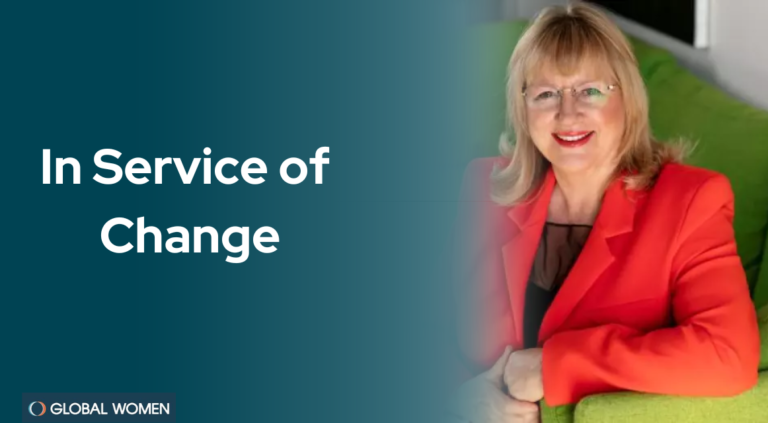
In service of Change

Having recently celebrated the launch of the Gattung Foundation, Global Women Chair and Member, Theresa

Having recently celebrated the launch of the Gattung Foundation, Global Women Chair and Member, Theresa Gattung, reflects on this legacy — while sharing plenty of pearls of personal wisdom — in a new interview with Business Desk

Matters of both business and life were explored with journalist Ella Somers in a My Net Worth column. From the art of recalibrating, weekend rituals, to her embankment on a journey of learning and embracing te Reo and te ao Māori, Theresa shared many interesting reflections. 

When asked what Theresa is proud of, she muses on the coming together of te ao Māori and the Pākehā world views. “The other thing I’m really proud of is we’re having a really honest, authentic conversation about how do we walk together in te ao Māori and the Pākehā world? I see that through so many of the corporates that I’m working with, and many of the people I know,” shares Theresa. She believes the world could learn a lot from this example: “I go, wow. That’s how we’ll avoid civil war. That’s how we’ll actually make this nation all that it could be and potentially lead the world.”

“I’ve been learning te reo for a while. It’s not just a language, it’s a whole way of looking at the world and the idea of being a good ancestor” — Theresa Gattung.

Not only that, Theresa shares how she’s embraced te reo. “I’ve been learning te reo for a while. It’s not just a language, it’s a whole way of looking at the world and the idea of being a good ancestor. Regeneration has turned up as ESG [environmental, social, and governance issues] in the corporate world, but indigenous people were there so far before us, so embracing that and walking together is something that I think is a very genuine and special part of New Zealand.”

Health, a focus for Theresa, was also reflected upon. A key priority Theresa mentions for herself, is not only to create a legacy foundation for generations of her family, but to stay healthy to keep creating the change she wants to see in the world. 

Additionally, health is key focus area for GlobalWomen advocacy. The recent fireside panel discussion ‘Healthy Women, Healthy World’ highlighted the ongoing inequities of women’s health and a clear message from members in attendance was to take action to be the change we want to see in the world, where girls and women thrive. 

As for her advice to younger people? Theresa stresses the importance of doing what you’re genuinely interested in — and that thinking about what you liked to do when you were a child can be a great starting point. The jobs that will be around in the future don’t even exist currently, you can change course as you wish, so it’s better to be swayed by interest over income. 

Read Theresa’s full interview with Ella Somers over on Business Desk.

New MP’s swearing-in will make political history for New Zealand Women

The swearing-in of a new Minister of Parliament marks a milestone for Parliament and


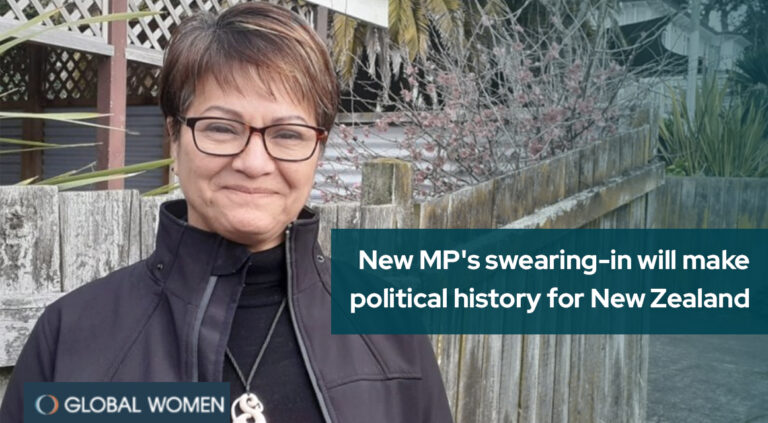
The swearing-in of a new Minister of Parliament marks a milestone for Parliament and women in New Zealand: it’s the first time in history that women in our Parliament have an equal share of seats in the House. 

On 25 October, Labour list MP Soraya Peke-Mason’s induction will mark the moment women represent 50% of the seats in the House of Parliament

It’s significant not just in terms of gender diversity, but also that a wāhine Māori marks this chapter. Not only that, Soraya Peke-Mason will be the first MP sworn in by the new Speaker, her cousin Te Tai Hauāuru MP Adrian Rurawhe, and will be the first new MP pledging allegiance to the new king, Charles III.

“It is an honour and a privilege to be going to Parliament to represent our rohe,” shares Peke-Mason. “I’m excited and proud to be able to represent our rohe, and for Te Awa Tupua, for Rangitīkei, for all of us to have another strong voice at a table that makes really important and hard decisions on behalf of Aotearoa.”

Soraya Peke-Mason will be sworn in at 2pm, in te reo Māori, and will give her maiden speech at 5.45pm on the 25th of October. 

Prime Minister Jacinda Ardern commented that this moment in gender equality was “significant and heartening” and that it “shows the maturity of Āotearoa in terms of equity from a gender perspective.”

This shows an interesting trend in public gender representation and equity, as this year marks the moment that women now account for more than half of our country’s public board seats. 

Read more about this history-making moment over in our Partners, Whakaata Māori’s Te Ao news section.

Have you heard about the gender aspiration gap?

There’s many gaps when it comes to women’s workplace interactions. We’ve spoken at large about

There’s many gaps when it comes to women’s workplace interactions. We’ve spoken at large about participation gaps, power gaps, pension gaps and of course, wage gaps. 

Research is showing there’s another, more illusive, gap that’s pervasive between working men and women: the aspiration gap — and it’s starting at a younger age, despite cultural shifts.

Globally, Women are not aspiring to be leaders at the same rate that men are, according to research by Ekaterina Netchaeva from Bocconi University in a piece on The Conversation.

This comes from six decades of studies across 138,00 US participants. Within this a model of employees with eight hierarchical levels of leadership shows that there are 2.13 men for every woman aspiring to reach the highest organisational level.

Age is shown to have a huge impact on this. University is cited as the time where the aspirations start to split between men and women. Researchers state that it’s likely due to people getting their first glimpse of working life through internships and industry-related jobs. 

“The aspiration gap is more prevalent in male-dominated and mixed industries.”

Additionally, industry matters in this equation. The aspiration gap is more prevalent in male-dominated and mixed industries — although still shown, albeit in smaller amounts, in women-dominated industries like education and nursing. 

While the research hasn’t yet been able to test an explanation for the aspiration gap, there’s a belief that it involves “self-stereotyping.” They also cite the likelihood of women having more experiences of workplace bias, discrimination as a factor, along with the thoughts of how leadership positions and subsequent responsibilities may impact family lives. 

“Our results suggest that interventions aimed at increasing women’s leadership aspirations should ideally occur before or during college” — Researcher Ekaterina Netchaeva

This ties into previously explorations on how women are more likely to lowball their own abilities and entrepreneurial offerings, shrug off praise, and experience a different level of confidence within their workplace selves. 

Creating strong pipelines — both tangibly within organisations and also on a more abstract level, and starting from university age — are a key part of overcoming this trend. “Developing mentorship schemes or highlighting role models” is cited by Ekaterina Netchaeva. “Organisations should also focus on women who exhibit leadership potential early in their careers and provide them with useful resources and support to progress upwards through the organisation. Our results suggest that interventions aimed at increasing women’s leadership aspirations should ideally occur before or during college.” 

Read the full scoop on The Conversation for more insights on the Aspiration Gap.  

KPMG Publishes Māui Rau Report 2022

Global Women Partners, KPMG New Zealand, have recently released the latest findings on what the

Global Women Partners, KPMG New Zealand, have recently released the latest findings on what the evolution of the current generation of Post Settlement Governance Entities might involve. 

As part of their ongoing Maui Rau Thought Leadership series, KPMG’s report looks at the structure of PSGEs, resource expectations and it provides points on where PSGEs can position themselves to best materially contribute to change the trajectory for whānau. 

The report draws on the experiences of individuals who have been deeply involved with iwi entities — along withKPMG New Zealand’s perspectives. 

This particular report has pulled back the curtain on some interesting findings. It shows that the expectations of iwi entities far outweigh the resource base they have to deliver. Additionally, the structure of these PSGEs have been found to have not  changed despite significant environmental shifts. 

“So much media and attention is on the estimated $69 billion asset value, but it is not often made clear that the majority of this is not due to Treaty settlements, not in liquid assets, and not $69 billion of annual income,” says KPMG Partner and National Industry Lead for Māori, Riria Te Kanawa. “It represents a capital base from which annual returns are split between funding operations, distributing benefits for today and reinvesting for future generations.  Iwi are not, and cannot operate like mini-governments and it is not uncommon to find situations where iwi are effectively working with $130 – $180 per person per annum to deliver on expectations for this generation.”

The report also offers some future-focused wisdom, suggesting that now is the time to zone in and understand how and where PSGEs can best position themselves to deliver. Māui Rau outlines six areas that might be considered en route to PSGE 2.0, which draw on the complexity of the context in which PSGEs operate today.

The report recognises some of the reality that Māori face as they brush up against and interact with government systems and the financial realities and constraints. It also acknowledges that there needs to be a balance between what is centralised and what is localised. 

Most of all, this in depth, pulse-checking report stresses the importance of those who are closest to the issues and actions having the shaping perspectives: “Maui Rau is a kaupapa that has always sought to understand the perspectives of those closest to the issues. This report aims to bring those perspectives together and provoke the thinking and discussions necessary for us to constructively challenge the status quo.

Read the full Māui Rau 2022 report through KMPG New Zealand here to discover all the insights.

Help us change the face of sport in New Zealand

You are invited to change the face of sports. How? By sending the ladder down,

You are invited to change the face of sports. How? By sending the ladder down, and sponsoring someone to attend a game-changing conference. 

The donation box is live to sponsor a participant to attend the world’s largest gathering to advance gender equity and equality in sport: the IWG World Conference on Women & Sport, happening at Aotea Centre in Tāmaki Makaurau, Auckland, and online.

With 500 confirmed speakers, 1,200+ leaders are expected in person and 500+ more online, the conference is the largest in the world of its kind. It has a strong objective to share research, case studies, toolkits and ideas that can be practically applied to ensure women and girls gain equity of opportunity to participate, compete and build careers in sport.

WISPA is hoping to give away 50 registrations to members of our sports communities nationally that do not have the means to participate. Your sponsorship will help those people be fully part of the action. 

Here’s how to help:

  • Contact the agency on iwg@theconferencecompany.com and tell them that you want to help #ChangeTheFaceofSport by donating registrations.
  • You can donate as many as you like, and the agency will invoice you. 
  • Registrations are: 
    • $1,100 + GST per person for the 4-day hybrid pass 
    • $900 + GST per person for the 4-day virtual pass 
    • 5% discount for groups of 5x or more registrations 
  • They will be given away on your behalf and we will promote your contribution on website/social media and at-event.


Contact IWG to enquire/make your sponsorship donation or learn more here


Te Wiki o te Reo Māori, Māori Language Week in context

“Ko te reo te mauri o te mana Māori. Ko te kupu te mauri o

“Ko te reo te mauri o te mana Māori. Ko te kupu te mauri o te reo Māori. E rua ēnei wehenga kōrero e hāngai tonu ana ki runga i te reo Māori. Ko te reo, nō te Atua mai.

The language is the life force of the mana Māori. The word is the life force of the language. These two ideas are crucial to the Māori language. A language that is a gift from God”

Sir James Hēnare, 1911–1989

As with everything we commemorate, celebrate and reflect on, understanding its roots and wider significance is key to understanding the true kaupapa it represents.

This Te Wiki o te Reo Māori, we would like to echo a post National Library has created to reflect on why this week holds power beyond the concept of language and highlight the timeline for te Reo Māori.

Te reo Māori has never been acknowledged as anything more than a language, shares authors Ruki Tobin and Erena Williamson.

Understanding Te reo isn’t understanding a language in silo. It is “the key to understanding our past, our present, and our future as united peoples of Aotearoa. It is a living entity that draws its mauri or life force from the user. It opens the door to a different world that invites you to learn more about your connections to the taiao or environment and your place in the whakapapa or genealogy of the universe,” shares Ruki Tobin, Poutiaki Rauemi.

Of course, a key part of the journey is understanding the timeline that paved the way for the week as we currently know it:

The Māori Language Petition (1972)

Te Reo Māori Day is on September 14th. This day celebrates and acknowledges the Māori Language Petition that was brought to Parliament with 30,000 signatures in 1972 by Ngā Tamatoa and Te Reo Māori Society to introduce the teaching of te reo Māori in primary and secondary schools.

Te Wiki o te Reo Māori (1975)

The day extended to a week, which still continues to today.

The emergence of kaupapa Māori education (1980s)

Kōhanga reo for preschoolers and kura kaupapa Māori for primary and secondary school students were introduced in the 80’s, bringing  kaupapa Māori education to institutions. Many of the early kura continue to flourish today.

Te reo Māori on radio (1920s) and television (1982)

The first television programme entirely in te reo Māori, Te Karere, was broadcast in 1982.

Te reo Māori recognised (1986) and an official language (1987)

The Waitangi Tribunal recognised te reo Māori as a taonga (treasure), one year before it was made an official language of Āotearoa New Zealand.

Mahuru Māori is born (2017)

Mahuru Māori invites individuals to engage in a variety of challenges using te reo Māori in their daily lives. This emerged after te reo expert Paraone Gloyne, undertook a social experiment to speak te reo Māori for one entire month.

Where are we today?

One in six Māori can speak te reo. Those aged between 15 and 24, along with those over 55, are most likely to be able to speak the language — a promising outlook for future generations. National Library has a stellar collection of examples to inspire.

Hear the full timeline of Te Wiki o te Reo Māori on National Library here. 

More women now on public boards in NZ than ever before

  The number of women on public boards in Aotearoa New Zealand has officially been


The number of women on public boards in Aotearoa New Zealand has officially been the highest it’s ever been: with wāhine now making up 52.5% of all public board and committee members.

This trend comes after a year of gender-equitable board appointments, where 54.6% of all new appointments were women. 

“The facts prove that diverse boards bring a wider range of knowledge, expertise and skill. Which of course can only be of benefit to the organisation the board is governing,” Minister for Women Jan Tinetti, says upon the release of this information. “Ensuring women’s voices are around the board tables of our public organisations is a crucial component. It also paves the way for more women to follow,” she continues. 

Ensuring women’s voices are around the board tables of our public organisations is a crucial component. It also paves the way for more women to follow” — Minister for Women Jan Tinetti

Not only is this diversity pulse-check giving a glimpse into the gender balance of public boards, it leans into a new era for ethnicity reporting. As of now, 98.9% of board members have had their ethnicity data collected — the highest number of ethnicity data that the public sector has ever been able to collect.

While the’re been a gradual improvement in the ethnic diversity of the public sector’s board members, there’s hopes and commitment that it’ll continue to be grown. 

“We must ensure that our public sector boards are able to better serve the needs and aspirations of our ethnic communities that make up close to 20 percent of our total population” — Minister for Women Jan Tinetti

“Minister for Pacific Peoples Aupito William Sio and Minister for Diversity, Inclusion and Ethnic Communities Priyanca Radhakrishnan and I are committed to increasing ethnic diversity across all public sector boards and committees,” shares Minister Jan Tinetti.

“We are one of the most ethnically diverse countries in the world and that diversity is a strength. We must ensure that our public sector boards are able to better serve the needs and aspirations of our ethnic communities that make up close to 20 percent of our total population.”

Explore more of the The Stocktake of Gender, Māori, Pacific and Ethnic Diversity on public sector boards and committees via the Ministry of Women at www.women.govt.nz.